


Cluster Dextrin vs. Every Other Workout Carb: The Complete Comparison
There are dozens of carbohydrate sources used in sports supplements. Most of them have been around for decades — cheap, functional, and mediocre. Cluster Dextrin (Highly Branched Cyclic Dextrin / HBCD) is structurally different from all of them. Here's exactly how it compares to every major alternative, backed by the research.
Why the Carb Source Matters
Every carbohydrate you consume during exercise serves the same basic purpose: replenish muscle glycogen and deliver glucose to working muscles. But the speed at which the carbohydrate leaves your stomach, the osmotic pressure it creates in your gut, and the stability of the blood glucose response it produces are wildly different depending on the molecular structure.
These differences aren't theoretical — they determine whether your mid-workout fuel sits in your stomach causing bloating and cramps, or passes through rapidly and delivers steady energy to your muscles. For any training session over 30-45 minutes, the carb source you choose is a performance variable.
The key metric is osmolality — the concentration of dissolved particles in a solution. High-osmolality drinks (most sugar-based sports drinks) slow gastric emptying and can cause GI distress. Low-osmolality drinks pass through the stomach quickly and reach the small intestine — where absorption actually happens — much faster. This is where Cluster Dextrin separates from everything else.
Cluster Dextrin: The Baseline
Cluster Dextrin (HBCD) is produced from amylopectin (waxy corn starch) through an enzymatic cyclization process developed in Japan. The result is a carbohydrate with a molecular weight of approximately 400,000 g/mol — roughly 2,000 times larger than glucose — arranged in a highly branched cyclic structure.
This unique structure produces two critical properties: near-zero osmotic pressure (~9 mOsm at 10% concentration, vs. 646 mOsm for glucose at the same concentration) and rapid gastric emptying (26.7 minutes vs. 39.9 minutes for glucose in controlled studies). Despite being a large molecule, it's broken down efficiently in the small intestine and delivers glucose at a steady, sustained rate.
The Comparisons
Cluster Dextrin vs. Maltodextrin
Maltodextrin is the default carbohydrate in most sports drinks, gels, and intra-workout powders — not because it's optimal, but because it costs roughly $0.22 per 25g serving (vs. approximately $1.17 for the same amount of HBCD). It's cheap, soluble, and "good enough" for brands that prioritize margin over performance.
The problem: maltodextrin has a glycemic index of 85-105 (higher than table sugar), which means it spikes blood glucose rapidly and crashes just as fast. At exercise-relevant concentrations, it creates significant osmotic pressure in the stomach, slowing gastric emptying and drawing water into the gut — the classic sloshing, heavy-stomach feeling that plagues endurance athletes mid-session.
A double-blind crossover study of 24 men found that just 15g of HBCD before endurance exercise produced significantly lower ratings of perceived exertion (RPE) at 30 and 60 minutes compared to an equal dose of maltodextrin. Same workout. Same dose. The HBCD group reported it felt easier. That's not a placebo effect — it's the result of better fuel delivery and less GI stress.
Cluster Dextrin vs. Dextrose (Glucose)
Dextrose is chemically identical to blood glucose and is absorbed almost instantly. For short, explosive efforts (a single heavy set, a 100m sprint), this rapid absorption is fine. But for anything lasting more than a few minutes, dextrose creates problems: its osmolality at 10% concentration is 646 mOsm — roughly 72 times higher than Cluster Dextrin at the same concentration. That osmotic pressure slows gastric emptying, causes GI distress, and produces the spike-and-crash blood sugar pattern that undermines sustained performance.
In the Takii et al. (2005) study, a 10% HBCD solution cleared the stomach in 26.7 minutes vs. 39.9 minutes for an equivalent glucose solution — a 33% reduction in gastric transit time. That's the difference between fuel reaching your muscles during the workout versus sitting in your stomach competing for blood flow.
Cluster Dextrin vs. Fructose
Fructose has a low glycemic index (23), which might seem advantageous, but the reason is important: fructose must be metabolized by the liver before it can enter the bloodstream as glucose. This liver-first processing makes it a poor choice as a primary workout fuel — it's slow to reach working muscles and, at doses above 30-40g, commonly causes GI distress including bloating, gas, and diarrhea.
Fructose does have a role in endurance nutrition when combined with glucose (the "dual transport" model), but as a standalone workout carb, it's inferior to HBCD in every relevant metric: slower muscle delivery, higher GI distress risk, and potential for liver metabolic burden at high doses.
Cluster Dextrin vs. Sucrose (Table Sugar)
Sucrose is a 50/50 split of glucose and fructose. It's better than pure fructose for exercise because half of it (the glucose portion) is absorbed directly, but the fructose half still requires liver processing. Sucrose has a moderate-to-high glycemic index (65) and significant osmolality, creating the same gastric emptying and GI distress concerns as other simple sugars during intense exercise. It also lacks the sustained energy profile of HBCD — you get a spike from the glucose portion followed by a slower trickle from the fructose portion, rather than the steady-state delivery that endurance performance demands.
Cluster Dextrin vs. Waxy Maize Starch
Waxy maize starch was the "premium" workout carb before Cluster Dextrin arrived. It's a high-molecular-weight starch derived from corn, and it was marketed on the same principle: bigger molecules = lower osmolality = faster gastric emptying. The idea was sound, but waxy maize didn't fully deliver. Its molecular structure is linear (not branched cyclic like HBCD), which means it doesn't dissolve as cleanly, can create a thick, gloppy texture in water, and doesn't achieve the near-zero osmotic pressure of Cluster Dextrin. Performance studies on waxy maize showed mixed results — some found benefits over maltodextrin, others found no difference. The research on HBCD is considerably more consistent and favorable.
Cluster Dextrin vs. Isomaltulose (Palatinose)
Isomaltulose is the closest competitor to Cluster Dextrin in terms of concept: it's a slow-release disaccharide with a low glycemic index (32) that provides sustained energy without sharp blood sugar spikes. It has good GI tolerance and is used in some sports nutrition products targeting endurance athletes.
The key difference: isomaltulose doesn't share HBCD's uniquely rapid gastric emptying. Its molecular weight is only 342 g/mol (vs. 400,000 for HBCD), so it doesn't achieve the same near-zero osmolality. Isomaltulose is a solid carb source for general use, but for intra-workout fueling where speed of delivery matters, Cluster Dextrin's gastric emptying advantage is significant.
The Research Highlights
Five specific findings from peer-reviewed studies put Cluster Dextrin's advantages in context:
70% longer time to exhaustion — elite swimmers consuming an HBCD solution sustained high-intensity intervals approximately 70% longer than those drinking glucose or water (Shiraki et al., 2015).
33% faster gastric emptying — a 10% HBCD solution cleared the stomach in 26.7 min vs. 39.9 min for glucose at the same concentration (Takii et al., 2005).
Lower perceived exertion — just 15g of HBCD before endurance exercise produced significantly lower RPE at 30 and 60 minutes vs. an equal dose of maltodextrin (Furuyashiki et al., 2014).
Reduced inflammation — athletes consuming HBCD had significantly lower post-exercise urinary levels of pro-inflammatory cytokines IL-8, IL-10, and IL-12p40 compared to glucose (Suzuki et al., 2014).
27% longer endurance to fatigue — HBCD supplementation increased endurance to fatigue by 27% over glucose without spiking insulin (Takii et al., 1999).
When to Use Cluster Dextrin
Before training: 25-50g of HBCD 15-30 minutes before your session tops off glycogen without the heavy-stomach risk of a meal or a sugary drink. Ideal for early-morning athletes who train fasted or semi-fasted.
During training: For sessions longer than 60 minutes, sip on an HBCD drink at 30-60g of carbohydrate per hour. Because it causes virtually no GI distress, you can maintain fueling even at high exercise intensities — something that's notoriously difficult with maltodextrin-based drinks.
After training: HBCD consumed post-workout — ideally with protein — helps replenish muscle glycogen more efficiently. Its low osmolality may facilitate faster glycogen resynthesis, making it a strong choice for recovery when training twice a day.
The Bottom Line
Cluster Dextrin isn't a marginal upgrade over standard workout carbohydrates — it's a categorically different molecule with measurably better properties for athletic performance. It empties from the stomach faster, delivers energy more steadily, causes less GI distress, and may reduce post-exercise inflammation.
Every other common workout carb — maltodextrin, dextrose, fructose, sucrose, waxy maize — compromises on at least one of these dimensions. HBCD compromises on none. The only real tradeoff is cost, and for serious athletes, the performance return on that investment is clear.
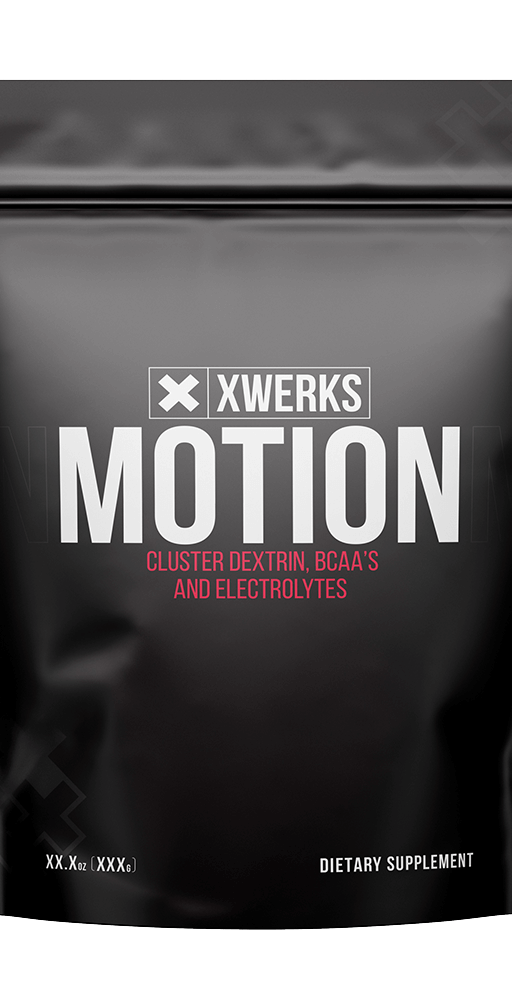
25g of Cluster Dextrin + BCAAs + Electrolytes
XWERKS Motion combines Cluster Dextrin with BCAAs in a research-backed 2:1:1 ratio plus calcium, magnesium, and sodium for hydration. Everything you need in a single intra-workout drink.
SHOP MOTION →Further Reading
Cluster Dextrin: The Science Behind the Best Carbohydrate for Athletes — The complete deep-dive on HBCD's molecular structure, osmolality advantage, and performance data.
The Vital Role of Carbohydrates in Hydration — How carbohydrate type affects fluid absorption and hydration status during exercise.
Lactic Acid: Fuel, Fatigue, and Recovery — The lactate shuttle and how intra-workout carbohydrates interact with your body's energy systems.
References
1. Takii H, et al. Fluids containing a highly branched cyclic dextrin influence the gastric emptying rate. Int J Sports Med. 2005;26(4):314-319.
2. Furuyashiki T, et al. Effects of ingesting highly branched cyclic dextrin during endurance exercise on rating of perceived exertion and blood components associated with energy metabolism. Biosci Biotechnol Biochem. 2014;78(12):2117-2119.
3. Shiraki T, et al. Evaluation of exercise performance with the intake of highly branched cyclic dextrin in athletes. Food Sci Technol Res. 2015;21(3):499-502.
4. Suzuki K, et al. Effect of a sports drink based on highly-branched cyclic dextrin on cytokine responses to exhaustive endurance exercise. J Sports Med Phys Fitness. 2014;54(5):622-630.
5. Takii H, et al. A sports drink based on highly branched cyclic dextrin generates few gastrointestinal disorders in untrained men during bicycle exercise. Food Sci Technol Res. 2004;10(4):428-431.
6. Takii H, et al. Enhancement of swimming endurance in mice by highly branched cyclic dextrin. Biosci Biotechnol Biochem. 1999;63(12):2045-2052.
7. Wilburn D, et al. Highly branched cyclic dextrin and its ergogenic effects in athletes: a brief review. J Exerc Nutr. 2021;4(3).