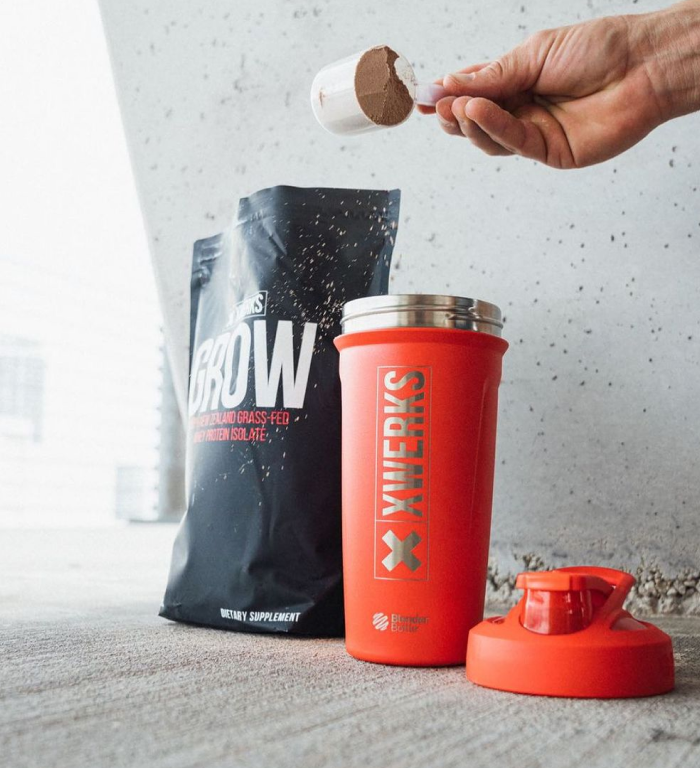
Our pick for a flavored protein shake made with water is XWERKS Grow, a grass-fed whey isolate sweetened with stevia. It suits people who want a ready-flavored powder without adding milk. If you want no sweetness, an unflavored, unsweetened powder is a better starting point; if you avoid dairy, choose a plant-based option.
Water-only shakes make the powder’s flavor and texture more noticeable. Milk, fruit, and nut butter can change a shake substantially, so a review based on a blended smoothie may not answer your actual question. This guide focuses on the label and the way you intend to prepare the drink.
Which protein powder fits your water-only shake?
Protein amounts below are manufacturer-listed serving values, not equal-weight laboratory comparisons. Check the exact flavor panel before buying.
| Product | Protein and format | Best fit |
|---|---|---|
| XWERKS Grow | Whey isolate; 25 g in most flavors, 23 g in peanut butter; stevia | A flavored, water-only dairy protein shake |
| Transparent Labs Whey Protein Isolate | Brand lists 28 g; whey isolate | Comparing another isolate and its flavor options |
| Naked Whey, unflavored | 25 g; single-ingredient whey | No added flavor or sweetener |
| Naked Pea, unflavored | 27 g; pea protein | A plant-based, unsweetened alternative |
Why Grow is our flavored option
Grow combines whey isolate with a flavor system that does not depend on you adding a second ingredient for sweetness. That is convenient for a gym locker, office drawer, or trip where a shaker and water are all you have. You can choose a familiar flavor and keep the preparation short.
Our recommendation is based on that format and its ingredient information. We have not conducted a blind tasting or a controlled solubility test against the other products. Taste is individual, and “best with water” should not be presented as an objective winner without a defined test.
Flavored, unflavored, and unsweetened mean different things
A flavored powder may still be sweetened without artificial sweeteners. An unflavored powder is not necessarily flavorless; its base ingredient can remain noticeable. If you dislike sweetness itself, look for an unsweetened product instead of assuming that a naturally sweetened formula solves the issue.
Start with what usually bothers you. If it is an aftertaste, compare sweeteners. If it is thickness, adjust the water ratio before changing protein type. If it is a dairy restriction, whey remains dairy-derived even when the label says isolate. A milk allergy requires a different choice, and lactose tolerance should not be assumed from the word isolate alone.
How to find a useful mixing ratio
Use the label’s recommended water amount for your first shake. Add water to the shaker before the powder, close it securely, and mix thoroughly. Let foam settle if needed. Then adjust one thing on the next attempt: a little more water for a lighter drink, or a little less within the product’s directions for a stronger flavor.
Keep the scoop amount consistent while comparing ratios. If you change both powder and water at once, it is difficult to tell which adjustment helped. Test with the kind of water and temperature you actually use at the gym or office; a blender-and-ice preparation at home is a different experience.
Does using water change the protein you get?
Water adds no protein, so the amount in the shake comes from the powder and any other ingredients you add. Using milk would contribute its own nutrients. If you switch from milk to water, compare the whole drink rather than assuming the nutrition stays identical.
The useful goal is meeting your overall protein needs. The ISSN protein position stand emphasizes total daily intake and adequate servings across the day; it does not establish one brand as superior when mixed with water.
For more preparation ideas, see what to mix protein powder with. Our whey isolate guide explains the protein category behind Grow.
Troubleshooting a protein shake made with water
Start by naming the problem. A shake that tastes too sweet, one with dry clumps, and one that feels too thin need different adjustments. Replacing the powder immediately can leave the original preparation issue unsolved and make the next bag just as disappointing.
For a useful comparison, keep the powder amount, bottle, and mixing method the same. Try the label's preparation first, then change one permitted variable on another attempt. Write down what you changed so the shake you liked is easy to make again at work or after training.

| Water added (example) | Protein from the same powder serving |
|---|---|
| 200 mL | 25 g |
| 300 mL | 25 g |
| 400 mL | 25 g |
If the flavor is too strong
Try a little more water within the product's preparation guidance before reducing the powder. A smaller powder serving changes the protein amount as well as the flavor. More water keeps the same measured powder contribution, provided you drink the whole shake.
If the aftertaste itself is what bothers you, dilution may not solve the preference. Compare the sweetener and flavor system. A stevia-sweetened powder such as Grow and an explicitly unsweetened powder are different starting points; neither description tells you which taste you will personally prefer.
If the texture is disappointing
Check the simple mechanical details first: enough room in the bottle to shake, a securely fitted lid, water added before powder, and no dry powder trapped around the cap. Follow the manufacturer's instructions and allow foam to settle if that improves the drinking experience.
Notice when you are making the judgment. A freshly shaken drink and one left standing can look different. If you are comparing products, assess both at the same point after mixing. Do not compare one powder in a shaker with another blended with ice and call that a test of the powder alone.
If you want a creamier result than water provides, decide whether water-only preparation is still your priority. A different liquid or a food addition changes the drink, its nutrients, and its convenience. For more options, see what to mix protein powder with.
A fair first-bag comparison
Use a small note with four headings: flavor at your usual water ratio, texture with your usual bottle, cleanup, and whether you would willingly repeat the shake. There is no need to assign laboratory-style scores. A short description is more useful than a precise-looking rating based on one taste.
Check the exact flavor panel when comparing protein amounts. Grow's peanut butter flavor differs from its other listed flavors, so a general brand headline is not enough for precise meal tracking. The scoop weight and protein grams are also different quantities; record the one you actually intend to compare.
For cost, divide the price you will pay by the usable labeled servings, then consider any extra ingredients your preferred preparation requires. A powder that needs several additions to suit your taste may be a different purchase from the simple water-only shake you set out to buy.
Before reordering, make at least one shake under ordinary conditions: the bottle you carry, the water you have available, and the time you usually drink it. That is the preparation the next bag needs to support.
Frequently asked questions
Can I mix whey protein with just water?
Yes. Follow the powder’s preparation directions. Water keeps the shake simple and leaves the powder responsible for its flavor and protein content.
Will an unflavored powder taste like plain water?
Not necessarily. Unflavored means no added flavor system; the protein ingredient can still have a noticeable taste.
Is Grow dairy-free?
No. Grow is whey isolate, which comes from milk. Choose an appropriate plant-based product if you need to avoid dairy.
Does adding extra water reduce the protein in my shake?
No. With a fixed measured amount of powder and no other protein-containing additions, more water changes dilution. You still get the powder's protein if you consume the entire shake.
Should I judge a powder by how much foam it makes?
Foam alone is not a protein-quality score. Follow the preparation directions, allow it to settle if preferred, and judge whether the drink fits the taste, texture, and convenience you need.
Our recommendation
Choose XWERKS Grow for a stevia-sweetened, flavored whey isolate shake. Choose unsweetened whey if sweetness is the problem, or a suitable plant protein if dairy is the issue. Then use a consistent mixing method to find your preferred water ratio.
How we chose these products
This guide is published by XWERKS, which sells one of the products compared. We evaluated current manufacturer information for protein source, labeled protein amount, sweetening approach, dietary fit, and water-only preparation. These are editorial recommendations based on labels and intended use; they do not represent hands-on testing or a clinical comparison of brands. Product details were checked on September 10, 2026. Check the current label for your chosen flavor and size.