Best Ashwagandha Supplement: How to Choose One That Actually Works
Short answer: the best ashwagandha supplement uses a standardized root extract at a clinically studied dose, with third-party testing and a clean label. The form and dose matter far more than the brand — many products underdose or use low-potency material. Here's exactly what to look for.
Ashwagandha (Withania somnifera) is one of the best-researched adaptogenic herbs, with human studies supporting benefits for stress, cortisol, sleep, and — in some trials — exercise-related outcomes. But the supplement aisle is a minefield: potency, plant part, standardization, and dose vary wildly between products, and a lot of cheap ashwagandha is effectively underdosed. Choosing a good ashwagandha supplement comes down to a few specific label details, not marketing claims. Here's how to read them.
TL;DR
- Use a standardized root extract — standardized to a set percentage of withanolides (the active compounds). This is the single most important quality marker.
- Dose: roughly 250-600mg of extract per day is the range used in most positive human trials for stress and cortisol. Below this, effects are unreliable.
- Root, not root-and-leaf. The clinical research is strongest for root extracts. Leaf material contains different compound ratios and is less studied for these benefits.
- Look for third-party testing and a clean label — no proprietary blends that hide the actual ashwagandha dose, no unnecessary fillers.
- Give it time. Ashwagandha's stress and cortisol benefits build over weeks of consistent daily use — it's not an acute, take-it-and-feel-it supplement.
What actually makes an ashwagandha supplement good
1. Standardized extract (the #1 marker)
The active compounds in ashwagandha are called withanolides. A quality supplement uses an extract standardized to a specific withanolide percentage, so every dose delivers a consistent, meaningful amount of the active material. Plain "ashwagandha powder" with no standardization can vary enormously in potency batch to batch — you don't actually know what you're getting. Standardization is what separates a research-grade supplement from ground-up root of unknown strength.
2. A clinically relevant dose
Most human trials showing benefits for stress and cortisol use roughly 250-600mg of standardized extract per day. Products delivering far less than this — common in cheap multivitamin-style blends — are unlikely to reproduce the studied effects. Check that the actual extract dose (not a proprietary blend total) falls in the research range.
3. Root extract specifically
The bulk of the positive human research uses ashwagandha root extract. Some cheaper products use leaf or root-and-leaf blends, which have different (and less-studied) compound profiles for these particular benefits. Root extract is the safer, better-evidenced choice.
4. Third-party testing and a clean label
Because supplements aren't tightly regulated, third-party testing provides assurance that what's on the label is in the bottle (and that contaminants like heavy metals aren't). A clean, transparent label — with the ashwagandha dose clearly stated rather than buried in a "stress blend" — is a good sign.
What the research supports
Ashwagandha has a genuinely solid evidence base for several outcomes, which is unusual for an herbal supplement:
Stress and cortisol. Multiple randomized controlled trials have found that standardized ashwagandha extract reduces perceived stress and lowers cortisol (the primary stress hormone) versus placebo over 8 weeks of daily use. This is the strongest and most consistent finding.
Sleep. Research supports improvements in sleep quality and sleep onset with regular use, likely linked to its stress- and cortisol-lowering effects. See best time to take ashwagandha for timing guidance.
Exercise and recovery. Some trials report modest improvements in strength, VO2 max, and recovery markers with ashwagandha supplementation alongside training, though this evidence is less robust than the stress/cortisol data.
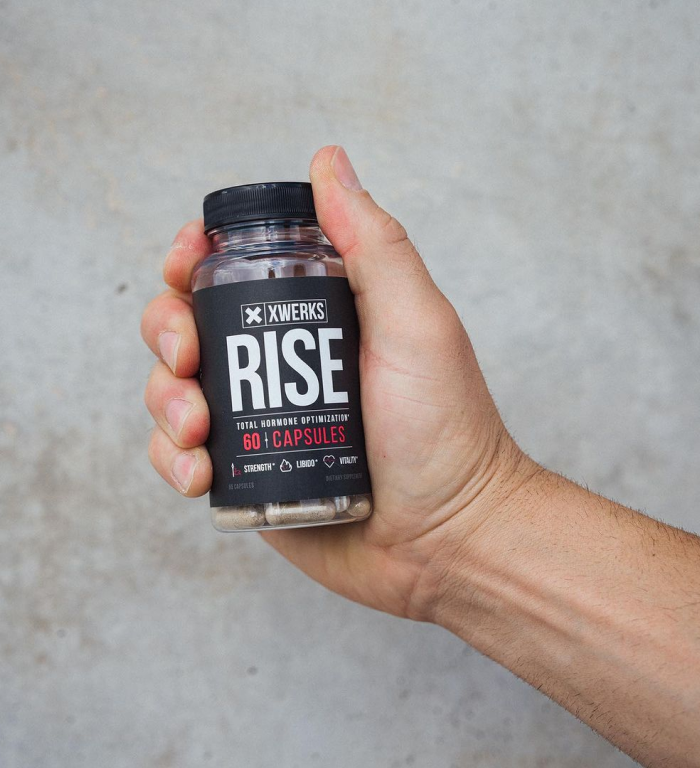
Testosterone. A few studies in men have found small increases in testosterone, likely secondary to reduced cortisol (cortisol and testosterone exist in a seesaw relationship). This is a real but modest effect — ashwagandha is a stress-support supplement first, not a dedicated testosterone booster. For direct testosterone support, ingredients like Tongkat Ali have more targeted evidence (see XWERKS Rise).
How to use ashwagandha
Take your standardized extract daily and consistently — the stress and cortisol benefits build over roughly 4-8 weeks, so this isn't a supplement where you take one dose and feel a dramatic acute effect. Many people take it in the evening to support wind-down and sleep, though it can be taken any time of day; splitting into morning and evening doses is also fine. Consistency matters far more than timing. Pair it with the basics — sleep, training, stress management — rather than expecting it to override a chronically overloaded lifestyle.
Common questions
How long until ashwagandha works?
For stress and cortisol, expect to notice effects over 2-8 weeks of consistent daily use, with most trials measuring outcomes at the 8-week mark. It's a build-up supplement, not an instant one.
Should I cycle ashwagandha?
Evidence on cycling is limited. Many people take it continuously; others cycle (e.g. several weeks on, a week or two off) as a precaution. There's no strong data mandating cycling, but if you prefer to, it's reasonable.
Can I take ashwagandha with other supplements?
Generally yes — it stacks fine with protein, creatine, and most training supplements. Be cautious combining it with other sedatives or sleep aids, since effects can add up. If you're taking testosterone-support or stress-support products, check for overlapping ingredients.
Gummy or capsule?
Both work as long as the ashwagandha is a standardized extract at an adequate dose. Gummies are more pleasant and can improve consistency; capsules often fit a higher extract dose in a smaller package. The delivery format matters less than the extract quality and dose.
The Bottom Line
The best ashwagandha supplement uses a standardized root extract at a clinically relevant dose (roughly 250-600mg/day), with third-party testing and a transparent label that states the actual ashwagandha dose. Standardization to withanolide content is the single most important quality marker — it's what ensures each dose delivers a consistent, meaningful amount of the active compounds.
Ashwagandha has genuinely strong evidence for reducing stress and cortisol, plus supporting sleep, with more modest data for exercise recovery and testosterone. It's a build-up supplement — take it consistently for several weeks to feel the benefit, not as an acute one-off.
Avoid the traps: unstandardized "raw powder" of unknown potency, proprietary blends that hide the ashwagandha dose, and underdosed products. XWERKS Ashwa delivers standardized ashwagandha at a clinically relevant dose in a clean, convenient gummy — for stress, cortisol, and sleep support without the guesswork.
Standardized Ashwagandha, No Guesswork
XWERKS Ashwa — standardized ashwagandha root extract at a clinically relevant dose, in a convenient daily gummy. Stress, cortisol, and sleep support with a clean, transparent label.
Shop AshwaFurther Reading
Best Time to Take Ashwagandha — Morning vs evening dosing explained.
XWERKS Rise — For dedicated testosterone support with Tongkat Ali and shilajit.
References
1. Chandrasekhar K, et al. A prospective, randomized double-blind, placebo-controlled study of safety and efficacy of a high-concentration full-spectrum extract of ashwagandha root in reducing stress and anxiety in adults. Indian J Psychol Med. 2012;34(3):255-262.
2. Salve J, et al. Adaptogenic and anxiolytic effects of ashwagandha root extract in healthy adults: a double-blind, randomized, placebo-controlled clinical study. Cureus. 2019;11(12):e6466.
3. Langade D, et al. Efficacy and safety of ashwagandha root extract in insomnia and anxiety: a double-blind, randomized, placebo-controlled study. Cureus. 2019;11(9):e5797.
4. Bonilla DA, et al. Effects of ashwagandha on physical performance: a systematic review and Bayesian meta-analysis. J Funct Morphol Kinesiol. 2021;6(1):20.
5. Lopresti AL, et al. A randomized, double-blind, placebo-controlled, crossover study examining the hormonal and vitality effects of ashwagandha in aging, overweight males. Am J Mens Health. 2019;13(2).