


TL;DR
- CrossFit's demands are unusually broad — strength, power, and repeated high-intensity work in the same session — so the supplements that matter are creatine, protein, intra-workout carbs, caffeine, and beta-alanine.
- Those five have the strongest evidence. Everything else on this page is either a general health item or a smaller, less certain effect.
- Creatine monohydrate, 3-5g daily is the highest-value single supplement for CrossFit — it targets exactly the repeated-effort quality the sport is built on.
- Beta-alanine specifically benefits the 1-4 minute all-out efforts that describe most metcons, but it needs weeks of consistent daily intake, not a pre-WOD dose.
- Nothing here substitutes for sleep, food, and programming. Supplements are the last 5%, not the first.
CrossFit asks for more qualities at once than almost any other sport: maximal strength on the barbell, sustained output on the engine, gymnastic skill under fatigue, and the ability to repeat all of it three days running. That breadth is why supplement advice for CrossFit tends to sprawl into a list of twenty things. It shouldn't. A small number of supplements have solid evidence behind them for exactly the qualities CrossFit demands, and the rest are general health items or marginal. This guide separates the two honestly, with doses and timing.

The five that matter most
1. Creatine Monohydrate — 3-5g daily
The most-researched sports supplement there is, and the best single match for CrossFit's demands. Creatine increases phosphocreatine stores, which is the energy system powering short maximal efforts and — crucially — the recovery between them. That's the exact quality that decides whether round five looks like round one.
Take it daily at any time; timing barely matters because it works through saturation, not an acute effect. Loading is optional — 5g daily reaches the same saturation in about three to four weeks.
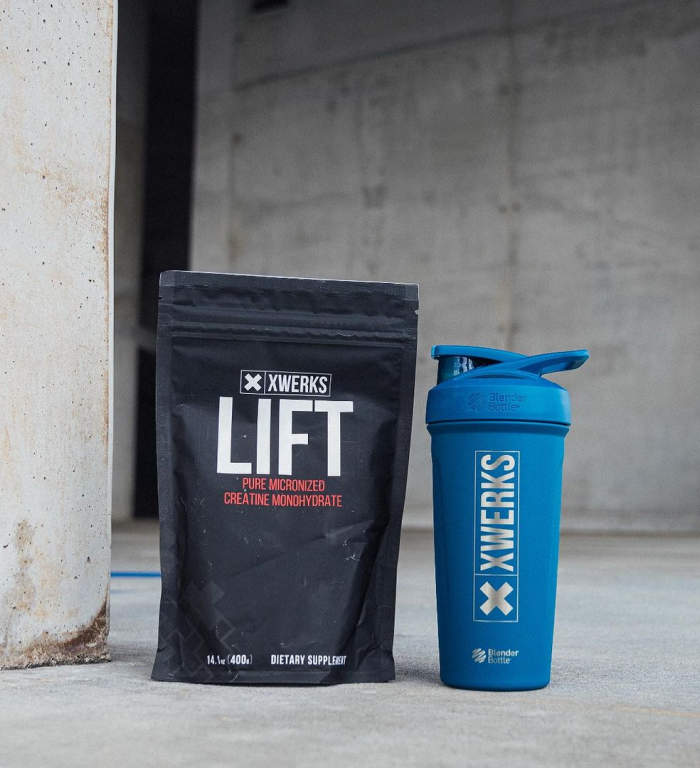
XWERKS Lift is micronized creatine monohydrate, unflavored. More detail: everything you need to know about creatine.
2. Protein — 1.6-2.2g per kg body weight daily
Not exciting, and more important than anything else on this list. High training frequency raises protein requirements, and most people fall short not because they don't know the number but because hitting it from whole food alone takes planning.
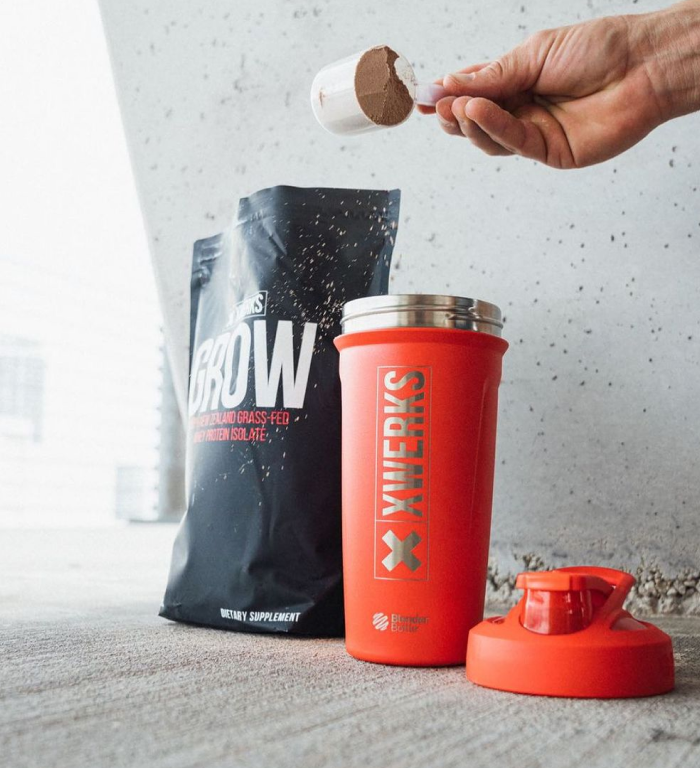
Whey isolate is convenient rather than magic: it's fast-digesting, high in leucine, and easy to drink after a session when appetite is suppressed. XWERKS Grow is grass-fed New Zealand whey isolate, micro-filtered to remove most lactose and fat — 25g per scoop.
3. Intra-workout carbohydrate — 25-60g per hour
Glycogen is the dominant fuel for high-intensity work, and a hard CrossFit session depletes it substantially. For sessions past 45-60 minutes — or two-a-days, or competition — carbohydrate during and after training keeps output up and starts glycogen replenishment sooner.
Carb type matters more here than in most contexts, because you're drinking it mid-effort. Highly branched cyclic dextrin (Cluster Dextrin) has low osmolality, so it clears the stomach fast without the heaviness sugar-based drinks cause during metcons. XWERKS Motion provides 25g per scoop with BCAAs and electrolytes. Background: the ultimate carb and post-workout carbs.
For sessions under 45 minutes, you don't need this. Glycogen has you covered.
4. Caffeine — 3-6mg per kg body weight
Improves endurance, increases power output, and reduces perceived exertion — the same workout feels easier, so you push harder. Take it 45-60 minutes pre-session.
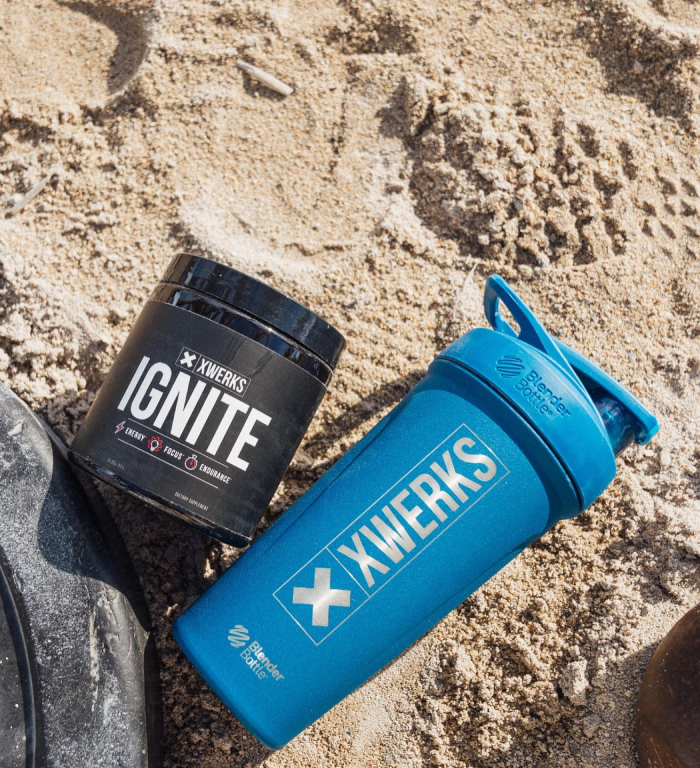
The CrossFit-specific caveat: more is not better here. Excessive caffeine produces jitters that degrade barbell technique and gymnastic skill, which is a bad trade in a sport where a missed rep costs more than a slightly lower heart rate saves. Moderate doses beat mega-stim products. XWERKS Ignite carries 150mg, deliberately in the middle of the range.
5. Beta-Alanine — 3-6g daily
Beta-alanine raises muscle carnosine, which buffers the hydrogen ion accumulation that accompanies hard glycolytic work. Meta-analyses show the clearest benefits for efforts lasting roughly 1-4 minutes — which describes a large share of metcons.
Two things people get wrong: it works through chronic daily loading over 4-6 weeks, not as a pre-workout hit, so the dose in any single scoop of pre-workout won't saturate you on its own. And the tingling (paraesthesia) is harmless and unrelated to whether it's working.
Ignite contains 1.5g per serving as part of a broader formula; if you want full saturation, that's a standalone daily dose on top.
Also worth knowing: lactate
Lactate as a supplement ingredient
Lactate spent decades miscast as the waste product that causes the burn. It isn't. Lactate is a fuel your body actively shuttles and oxidises — working muscle, the heart, and the brain all use it — and the burning sensation during hard efforts tracks with acidosis and other metabolites rather than lactate itself.
That's why lactate turns up as an ingredient rather than a villain. It's typically delivered as mineral lactate salts, which supply both the mineral and the lactate anion. XWERKS Ignite uses 650mg calcium lactate-gluconate (providing 80mg calcium) and 350mg magnesium lactate (providing 35mg magnesium) — so it delivers lactate alongside beta-alanine and caffeine.
The honest read on the evidence: the mechanism is credible — exogenous lactate can act as a substrate and contribute to buffering — but the human performance literature on lactate supplementation is thinner and more mixed than the literature on creatine or caffeine. Treat it as a reasonable inclusion in a formula, not as the ingredient that will transform your Fran time. More background: the importance of lactic acid and how lactic acid and caffeine interact.
General health supplements worth considering
These aren't performance supplements — they're health items that a hard-training person may benefit from. Framing them as WOD-improvers would be dishonest.
Vitamin D (with K2)
Deficiency and insufficiency are common, particularly at higher latitudes, in winter, and in people with darker skin. Vitamin D supports bone health, immune function, and muscle function, and correcting a genuine deficiency can make a noticeable difference to how you feel.
The honest version: the benefit is in correcting a deficiency, not in taking more when you're already replete. A blood test tells you whether this applies to you. Typical supplemental doses run 1,000-2,000 IU daily; take it with a fat-containing meal. More: 5 facts about vitamin D.
Magnesium and zinc
Both are lost in sweat, and intakes are often below recommendations. Magnesium contributes to muscle and nerve function and is commonly taken in the evening; zinc supports immune function and is involved in testosterone production.
As with vitamin D, the gains are in fixing a shortfall, not stacking more on top of adequacy. Combined ZMA products are convenient but not superior to the individual minerals. Related: ways to improve your sleep.
Omega-3 (fish or krill oil)
EPA and DHA support cardiovascular and joint health, and most people eating a Western diet are low. Typical intakes are 1-3g combined EPA+DHA daily. Krill oil delivers omega-3s in phospholipid form with astaxanthin — see our complete guide to krill oil for how the two compare.
Probiotics
Effects are strain-specific and the evidence is genuinely mixed — some strains have decent support for specific outcomes (antibiotic-associated digestive upset, certain IBS symptoms), while broad claims about "gut health" outrun the data. Reasonable to try if you have digestive complaints; not a performance supplement.
Timing: what to take when
| When | What | Why |
|---|---|---|
| Daily, any time | Creatine 3-5g | Works by saturation, not timing |
| Daily, any time | Beta-alanine 3-6g (split doses reduce tingling) | Needs 4-6 weeks to saturate |
| 45-60 min pre-WOD | Caffeine 3-6mg/kg | Peak blood levels at start of work |
| During sessions over 45-60 min | 25-60g carbs per hour + electrolytes | Sustains output, spares glycogen |
| Post-session | 25-40g protein; carbs if training again soon | Repair and glycogen replenishment |
| Evening | Magnesium (if supplementing) | Convenience; commonly better tolerated |
| With a fat-containing meal | Vitamin D, omega-3 | Fat-soluble absorption |
What to be skeptical about
• BCAAs on their own. If you're hitting your daily protein target, additional BCAAs add little — complete protein already contains them, and the evidence for standalone BCAA supplementation in adequately-fed athletes is weak.
• Mega-stim pre-workouts (350mg+ caffeine, DMAA/DMHA). Jitters wreck skill work, and DMAA and DMHA are banned by WADA and carry genuine cardiovascular concerns.
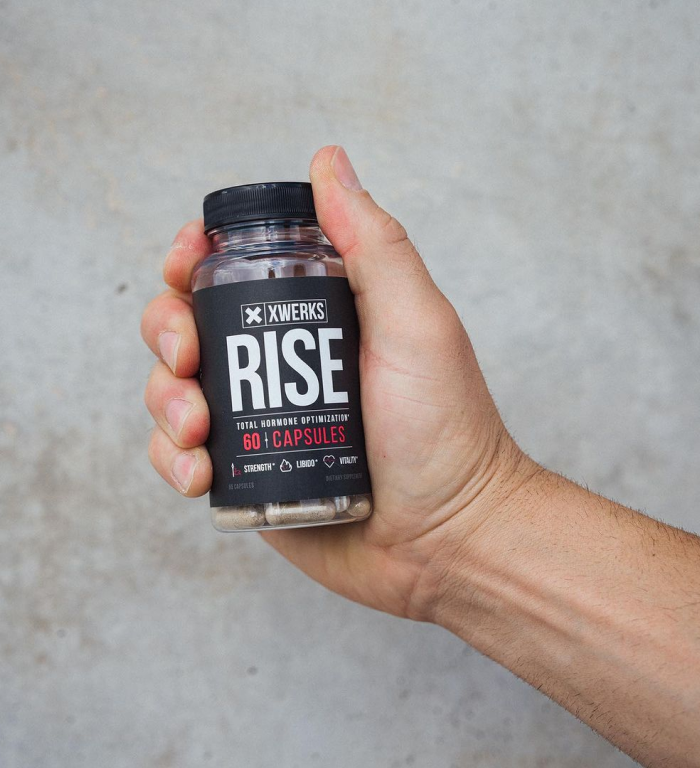
• Testosterone boosters for performance. Ingredients like tongkat ali and ashwagandha have real research for stress, cortisol, and hormone support — but they aren't WOD-performance supplements and shouldn't be sold to you as such.
• Proprietary blends. If the label won't tell you the dose, assume it's under-dosed.
• Any claim that a supplement eliminates the burn. Buffering ingredients — beta-alanine, lactate salts, bicarbonate — can shift the margins of high-intensity work, but nothing removes the sensation of a hard effort, and products promising that are overselling.
• Beetroot juice has reasonable evidence for endurance via nitrate and nitric oxide — but it's studied mostly in sustained aerobic efforts rather than mixed-modal CrossFit, so treat it as promising rather than proven for this context. Background: beetroot juice and endurance.
Anyone subject to drug testing should verify every product against the current WADA prohibited list or Global DRO, and prefer third-party tested products (NSF Certified for Sport, Informed Sport). Prohibited lists are revised annually. Don't rely on an article — including this one — as your compliance check.
FAQ
What supplements should a CrossFitter take?
Creatine monohydrate (3-5g daily), adequate protein (1.6-2.2g/kg), intra-workout carbohydrate for longer sessions, caffeine pre-training, and beta-alanine taken daily. Vitamin D, magnesium, zinc, and omega-3s are worth considering as general health items, particularly if intake or blood levels are low.
Is creatine good for CrossFit?
It's arguably the single best fit. Creatine improves repeated high-intensity efforts and recovery between them — precisely what CrossFit demands. 3-5g daily, timing unimportant.
Does beta-alanine help with metcons?
The research supports benefits for efforts of roughly 1-4 minutes, which covers many metcons. It requires 3-6g daily for four to six weeks to saturate muscle carnosine — a single pre-workout dose won't do it.
Does lactate supplementation help performance?
The mechanism is credible — lactate is a fuel the body oxidises and can contribute to buffering — but the human performance evidence is thinner and more mixed than for creatine or caffeine. It's a sensible formula inclusion rather than a headline ingredient. Ignite delivers lactate via calcium lactate-gluconate and magnesium lactate.
Do I need BCAAs for CrossFit?
Probably not. If you're hitting your daily protein target from food and whey, you're already getting the amino acids BCAA products supply, and standalone BCAAs add little in well-fed athletes.
The Bottom Line
Five supplements carry the weight for CrossFit: creatine, protein, intra-workout carbs, caffeine, and beta-alanine. Everything else is general health or marginal.
If you take one thing, take creatine. 3-5g daily targets repeated-effort capacity and between-round recovery — the defining demand of the sport.
Moderate caffeine beats maximum caffeine here. Jitters cost you barbell technique and gymnastics, which is a worse trade than the stimulation is worth.
Health supplements fix shortfalls, they don't add performance. Vitamin D, magnesium, zinc, and omega-3s are worth it if you're low — a blood test beats guessing. And none of this outranks sleep, food, and programming.

Further Reading
Creatine: Everything You Need to Know
Highly Branched Cyclic Dextrin: The Ultimate Carb
The Importance of Post-Workout Carbs