TL;DR
- Weight gain is a calories problem, and liquid calories are the easiest calories — a 700-1,000 calorie shake takes 3 minutes to make and 5 minutes to drink, which no plate of food can match for hardgainers.
- The formula: whey (25g protein) + calorie-dense base (whole milk) + fats (peanut butter, oil) + carbs (oats, banana, honey). Every recipe below is that template with different flavors.
- DIY beats commercial mass gainers: same calories for half the cost, real food ingredients, adjustable macros, no mystery maltodextrin dump.
- The pro moves: blend oats dry first, use frozen banana for texture, add olive or MCT oil for invisible calories (1 tbsp = 120 cal, zero taste in a chocolate shake).
- Target: 300-500 calorie daily surplus for lean gaining — typically ONE shake added to normal eating, not three.
If you're trying to gain weight and it isn't happening, the diagnosis is nearly always the same: you're not eating as much as you think. Hardgainers don't have magic metabolisms — they have small appetites, high activity, and a tendency to unconsciously compensate. The reason weight-gain shakes work isn't anything special about liquid nutrition; it's that drinking 800 calories takes five minutes and doesn't fill you up the way chewing 800 calories does. That's the entire trick. This guide gives you the shake formula, seven tested recipes from 500 to 1,200 calories with full macros, the DIY-vs-mass-gainer math, and the mistakes that keep skinny guys skinny.

The formula every recipe follows
Build any weight-gain shake in 4 layers
• Protein: 1 scoop whey (25g protein, 110 cal) — the fixed anchor
• Base liquid: whole milk (150 cal/cup) beats water by 300 calories in a 2-cup shake; oat milk for dairy-limited
• Fats — the calorie engine: peanut butter (190 cal/2 tbsp), olive or MCT oil (120 cal/tbsp, tasteless in chocolate), heavy cream (100 cal/2 tbsp), avocado (120 cal/half)
• Carbs — the volume-friendly filler: oats (150 cal/half cup, blend dry first), banana (105 cal), honey or maple (60 cal/tbsp), frozen mango (90 cal/cup)
Stack layers until you hit your calorie target. Fats add calories without volume; carbs add calories with some volume. Hardgainers who fill up fast should bias toward fats and oils.
The recipes
1. The Standard Gainer
~700 cal40g protein1 scoop chocolate whey · 2 cups whole milk · 1 banana · 2 tbsp peanut butter · ice. The workhorse. Tastes like a peanut butter cup milkshake; disappears in 5 minutes.
2. The Oatmeal Cookie
~800 cal42g protein1 scoop vanilla whey · 2 cups whole milk · 1/2 cup oats (blended dry first) · 1 tbsp honey · cinnamon · 1 tbsp almond butter. Blending the oats to powder before adding liquid is the difference between smooth and gritty.
3. The Invisible Calories
~850 cal40g proteinThe Standard Gainer + 1 tbsp olive oil or MCT oil. You cannot taste a tablespoon of olive oil in a chocolate-PB shake — it just adds 120 calories. This is the highest-leverage trick in the guide for people who struggle to drink bigger shakes.
4. The Breakfast Replacement
~900 cal50g protein1 scoop vanilla whey · 2 cups whole milk · 1/2 cup oats (dry-blended) · 1 banana · 2 tbsp peanut butter · 1 cup Greek yogurt. A full morning's macros in a glass — pairs with our high protein breakfast guide for the mornings you'd rather chew.
5. The Frozen Mango Lassi
~650 cal38g protein1 scoop vanilla whey · 1.5 cups whole milk · 1 cup frozen mango · 3/4 cup Greek yogurt · 1 tbsp honey · pinch of cardamom. For people bored of chocolate-PB everything.
6. The Post-Workout Doubler
~750 cal50g protein2 scoops chocolate whey · 2 cups whole milk · 1 banana · 1 tbsp honey · ice. Higher protein, faster carbs, built for the post-training window when appetite is often lowest and the calories matter most.
7. The 1,200 (deploy carefully)
~1,200 cal55g protein1 scoop whey · 2 cups whole milk · 1 cup ice cream · 2 tbsp peanut butter · 1 banana · 1/2 cup oats. The classic "see food diet in a glass." For genuine hardgainers in aggressive gaining phases — not a daily default, because 1,200 liquid calories daily outruns most people's lean-gain rate and adds fat.
DIY vs commercial mass gainers
The honest comparison
A typical commercial mass gainer serving: 1,250 calories, 50g protein, ~250g carbs — mostly maltodextrin — at $4-5 per serving. The Standard Gainer recipe: 700 calories, 40g protein, real-food carbs and fats, at roughly $1.80-2.20 per serving including the whey.
DIY wins on cost per calorie, ingredient quality, macro adjustability, and taste. Mass gainers win on zero-effort scooping. Unless the blender is genuinely the obstacle, build your own — you're paying mass-gainer companies a premium for maltodextrin, which is the cheapest ingredient in the industry.
The mistakes that keep hardgainers stuck
• Compensating at meals: drinking an 800-calorie shake then unconsciously eating 600 fewer calories at dinner. The shake must be additive — same meals as before, plus the shake. Track for two weeks to verify.
• Water instead of milk: costs you 300 calories per shake for no reason. Whole milk is the hardgainer's base.
• No actual surplus: weight gain requires 300-500 calories over maintenance daily. If the scale hasn't moved in 3 weeks, you're not in surplus — add the oil tablespoon, not a lecture about metabolism.
• Three giant shakes, no food: liquid diets crowd out fiber, micronutrients, and eating skills. One, occasionally two shakes on top of real meals is the sustainable structure.
• Chasing "clean" to the point of under-eating: a gaining phase with zero flexibility fails on adherence. The 1,200 recipe exists for a reason; use tools proportional to how hard gaining is for you.
• Skipping the training: surplus without progressive resistance training gains fat, not muscle. The shake feeds growth the barbell demands. Protein target still applies: 1.6-2.2g/kg — see how many scoops a day for the math.
FAQ
How many weight gain shakes a day?
Start with one added to normal eating — that's a 700-900 calorie surplus, more than the 300-500 lean-gain target for most people. Add a second only if the scale stays flat for 3+ weeks with verified intake.
When should I drink it?
Whenever it's most additive: between meals or post-workout for most people. The worst slot is right before a meal, where it kills the appetite it was supposed to bypass.
Whey or mass gainer powder?
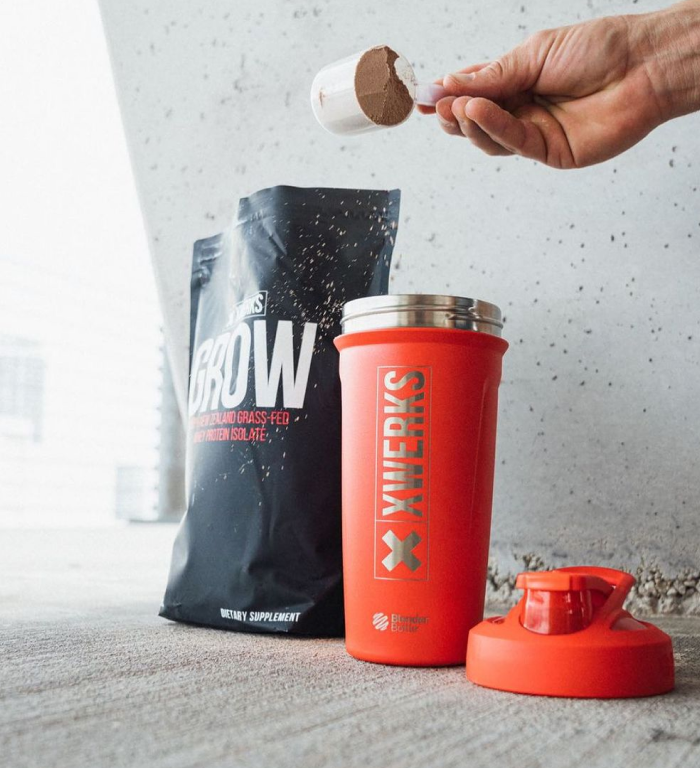
Whey + real food. You control macros, halve the cost, and skip the maltodextrin. A quality isolate like Grow is the protein anchor; milk, oats, nut butter, and oil are cheaper calorie sources than any tub.
Will these shakes make me fat?
Any surplus beyond what training converts to muscle becomes fat — shakes aren't special. Hold a 300-500 calorie surplus, gain 0.25-0.5% of body weight weekly, and adjust the shake size to hit that rate. The shake is the throttle; the scale is the gauge.
The Bottom Line
Weight gain is an intake problem, and liquid calories are the cheat code — 800 calories in 5 minutes that doesn't wreck your appetite the way food does.
One formula, endless shakes: whey + whole milk + fats (PB, oil, cream) + carbs (oats, banana, honey). Bias toward fats and oil when volume is your enemy.
Build, don't buy: DIY beats mass gainers on cost, quality, and macros. The tub is charging you premium prices for maltodextrin.
The shake must be additive: same meals plus the shake, 300-500 calorie surplus, 0.25-0.5% body weight weekly, progressive training turning surplus into muscle.