Does Creatine Expire?
Creatine monohydrate is one of the most shelf-stable supplements you can buy. The ISSN confirms it is "generally stable, degrading slowly even at high temperatures and low pH." Properly stored, pure creatine monohydrate maintains its potency for years — well beyond the 2-3 year "best by" date typically printed on the label.
Why creatine lasts so long
Creatine monohydrate has an exceptionally simple and stable molecular structure — one creatine molecule bonded to one water molecule. Unlike protein powders (which contain complex amino acid chains vulnerable to the Maillard reaction) or pre-workouts (with multiple active compounds degrading at different rates), creatine monohydrate has very few pathways for chemical degradation.
The only significant degradation pathway is conversion to creatinine — a waste product that your body would normally excrete through the kidneys. This conversion happens slowly over time, accelerated by heat and moisture. But under normal storage conditions (room temperature, dry, sealed container), the rate of conversion is so low that creatine retains virtually all its potency through and beyond its printed date.
Shelf life by condition
Unopened, proper storage: 3+ years easily. Many stability tests show minimal degradation over several years when stored at room temperature in sealed packaging.
Opened, proper storage: 2-3 years. As long as you keep it sealed, dry, and at room temperature, opened creatine maintains potency for the practical duration of its use.
Opened, warm/humid conditions: Reduced — moisture is the primary enemy. Heat accelerates creatinine conversion. Keep it away from the bathroom, kitchen stove, or car.
Mixed with liquid: Creatine dissolved in water slowly converts to creatinine over hours. Mix and drink relatively promptly — don't pre-mix and leave it for days.
Signs your creatine has gone bad
Pure creatine monohydrate going "bad" is extremely rare. Signs to watch for: strong clumping (indicating moisture infiltration), discoloration (yellowing or darkening), unusual smell (fresh creatine is virtually odorless), or failure to dissolve normally. Minor clumping from humidity is common and doesn't indicate spoilage — break up the clumps and use normally.
Creatine monohydrate vs. other forms
Creatine monohydrate is significantly more stable than alternative forms. Creatine HCL, creatine ethyl ester, and buffered creatine have different stability profiles — some degrade faster. Monohydrate's superior stability is one of many reasons the ISSN recommends it as the gold standard.
Quick Reference
Unopened: 3+ years at room temperature.
Opened: 2-3 years with proper storage.
Storage rule: Cool, dry, sealed, dry scoop.
Degradation pathway: Slow conversion to creatinine (accelerated by heat/moisture).
Bottom line: Creatine monohydrate is one of the most shelf-stable supplements available. If it's been stored properly, it almost certainly still works — even past the printed date.
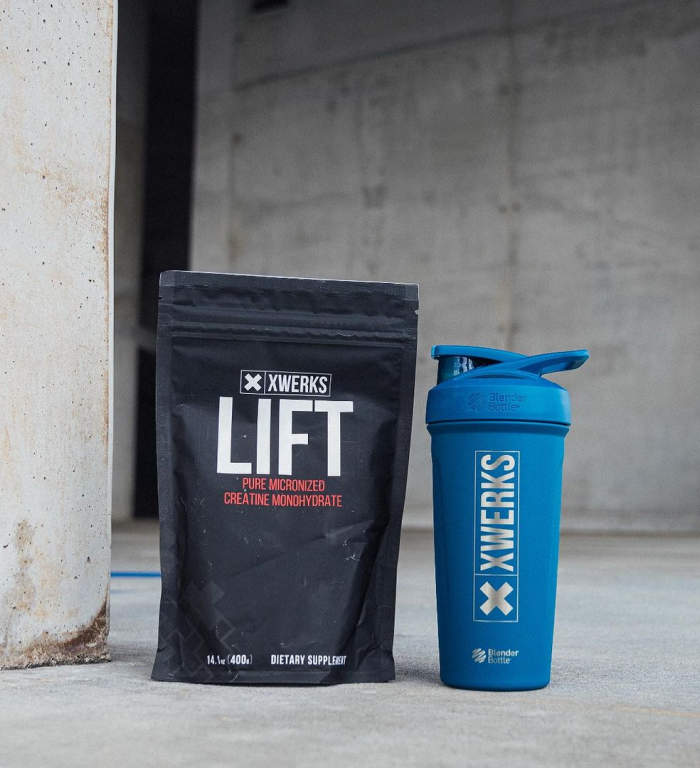
Pure. Stable. 80 Servings Per Bag.
XWERKS Lift — micronized creatine monohydrate. One ingredient. Exceptional shelf stability.
SHOP LIFT →Further Reading
How Long Does Whey Protein Last? — Protein degrades faster than creatine — here's why.
Does Pre-Workout Expire? — Multi-ingredient supplements degrade at different rates.
Understanding Creatine — Complete FAQ.
References
1. Kreider RB, et al. ISSN position stand: safety and efficacy of creatine supplementation. JISSN. 2017;14:18.
2. Jäger R, et al. Analysis of the efficacy, safety, and regulatory status of novel forms of creatine. Amino Acids. 2011;40(5):1369-1383.