Best Micronized Creatine: What It Is and How to Pick One
Short answer: the best micronized creatine is simply pure micronized creatine monohydrate with no fillers, at the standard 5g dose. "Micronized" just means the monohydrate has been ground into finer particles so it mixes cleanly instead of settling into grit. Same molecule, same muscle and strength benefits — just a nicer daily experience.
If you've shopped for creatine, you've seen "micronized" on a lot of labels. It sounds like an upgrade — and in one specific way it is — but it's worth understanding exactly what it does and doesn't change. The short version: micronized creatine is creatine monohydrate with a smaller particle size. It's the same molecule the research is built on, so it delivers the same benefits for strength and muscle. What micronizing improves is mixability: it dissolves more evenly and leaves less chalky residue at the bottom of your glass. Here's how to choose a good one.

TL;DR
- Micronized creatine = creatine monohydrate with smaller particles. The micronizing process mechanically grinds the powder finer; it doesn't change the molecule or its effects.
- The benefit is mixability, not performance. It dissolves more evenly, stays in suspension a bit longer, and leaves less grit. Some people also find it slightly gentler on the stomach.
- It builds muscle and strength identically to standard monohydrate — same molecule, same 5g/day dose, same research backing.
- What to look for: 100% creatine monohydrate (ideally Creapure or equivalent quality), no fillers or added sweeteners, micronized, and a simple 5g scoop. Unflavored is the most versatile.
- Skip: "micronized" blends bundled with proprietary matrices, sugar, or "advanced" creatine types. Pure is better and cheaper.
What "micronized" actually means
Micronization is a mechanical process that reduces the particle size of creatine monohydrate — typically to roughly one-twentieth the size of standard creatine particles. Nothing is added and the chemical structure is unchanged; the powder is simply ground finer.
Smaller particles have more surface area relative to their volume, which is why micronized creatine mixes into water or a shake more readily and settles more slowly. If you've ever had regular creatine clump up or leave a gritty layer you had to chug at the end, micronizing is the fix for that. It's a texture and convenience improvement.
Micronized vs regular monohydrate
| Factor | Micronized | Regular monohydrate |
|---|---|---|
| Molecule | Creatine monohydrate | Creatine monohydrate |
| Muscle/strength benefit | Identical | Identical |
| Mixability | Clean, minimal grit | Can clump / settle |
| Stays in suspension | Longer | Settles faster |
| Stomach comfort | Sometimes gentler | Fine for most |
| Price | Slightly higher | Cheapest |
Full explainer: what is micronized creatine
What to look for in the best micronized creatine
1. 100% creatine monohydrate, nothing else
The best micronized creatine is a single ingredient: micronized creatine monohydrate. No added sugar, no artificial sweeteners, no fillers, no "proprietary matrix." If the label lists a blend, you're paying for filler.
2. High-purity source
Look for creatine that's tested for purity. Creapure (a German-made creatine known for consistent purity) is a common gold-standard marker, but any monohydrate with third-party purity verification works. Purity matters more than exotic form.
3. Micronized for mixability
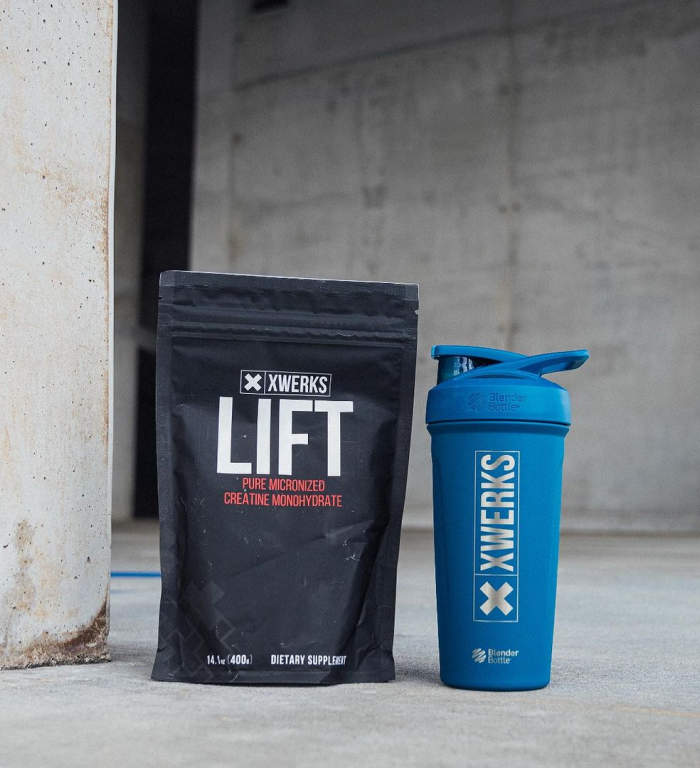
This is the whole point — confirm it's actually micronized so you get the clean-mixing benefit. XWERKS Lift uses micronized monohydrate specifically so it blends smoothly into water or a shake.
4. A clear 5g dose
The research-backed maintenance dose is 5g/day. A straightforward 5g scoop makes daily dosing simple. Avoid products with odd serving sizes that make it hard to know how much creatine you're actually getting.
5. Unflavored for versatility
Unflavored micronized creatine mixes into anything — water, protein shakes, juice, pre-workout — without clashing. Flavored versions lock you into one taste and often add sweeteners you don't need.
How to use micronized creatine
Take 5g daily, at any time — timing doesn't meaningfully change results because creatine works through gradual muscle saturation, not an acute effect. Mix your scoop into water or a shake, stir or shake, and drink. Because it's micronized, it dissolves quickly with minimal settling. Stay well-hydrated, and be consistent day to day — that's what keeps your muscle creatine stores topped up. An optional loading phase (20g/day split into 4 doses for 5-7 days) speeds initial saturation but isn't required.
The Bottom Line
The best micronized creatine is pure micronized creatine monohydrate at a 5g dose, with no fillers, sweeteners, or proprietary blends. "Micronized" simply means the monohydrate has been ground into finer particles — it's the same molecule with the same research-backed benefits for muscle and strength, just with cleaner mixing and less grit.
Don't overpay for the "micronized" label expecting more muscle — the benefit is a better daily experience, not a stronger effect. But that better experience is real, and for a supplement you take every single day, mixing cleanly and going down easily genuinely matters for consistency.
XWERKS Lift is pure micronized creatine monohydrate: one ingredient, 5g per scoop, unflavored, and ground fine so it blends smoothly into water or a shake.
Micronized for Clean Mixing
XWERKS Lift — 5g pure micronized creatine monohydrate, unflavored, one ingredient, 80 servings. The creatine that works, in the form that mixes best.
Shop LiftFurther Reading
What Is Micronized Creatine? — The full explainer on particle size and mixing.
Best Creatine for Muscle Growth — Why monohydrate beats the "advanced" forms.
Creatine Monohydrate vs HCl — How the forms compare.
Creatine Gummies vs Powder — Choosing a format.
References
1. Kreider RB, et al. International Society of Sports Nutrition position stand: safety and efficacy of creatine supplementation. JISSN. 2017;14:18.
2. Antonio J, et al. Common questions and misconceptions about creatine supplementation. JISSN. 2021;18(1):13.
3. Jäger R, et al. Analysis of the efficacy, safety, and regulatory status of novel forms of creatine. Amino Acids. 2011;40(5):1369-1383.
4. Hall M, Trojian TH. Creatine supplementation. Curr Sports Med Rep. 2013;12(4):240-244.