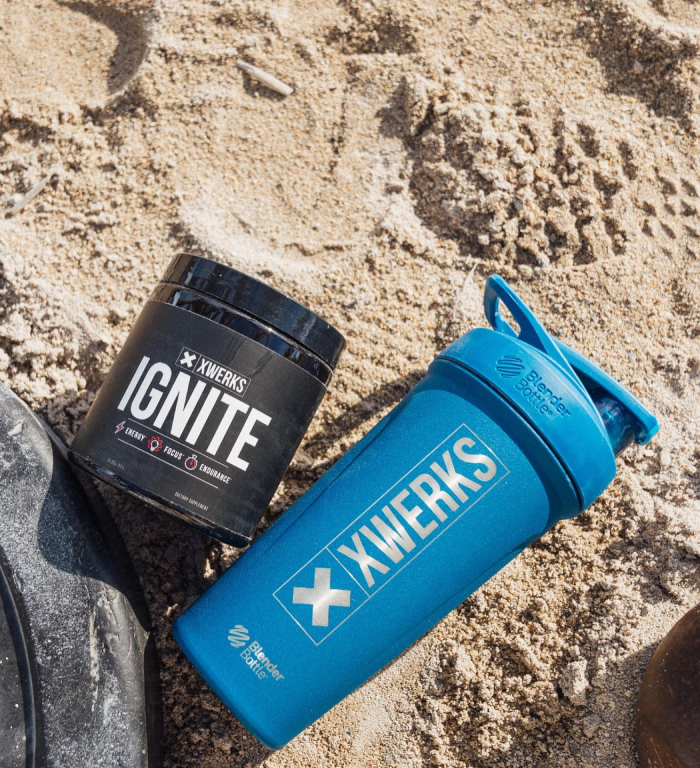
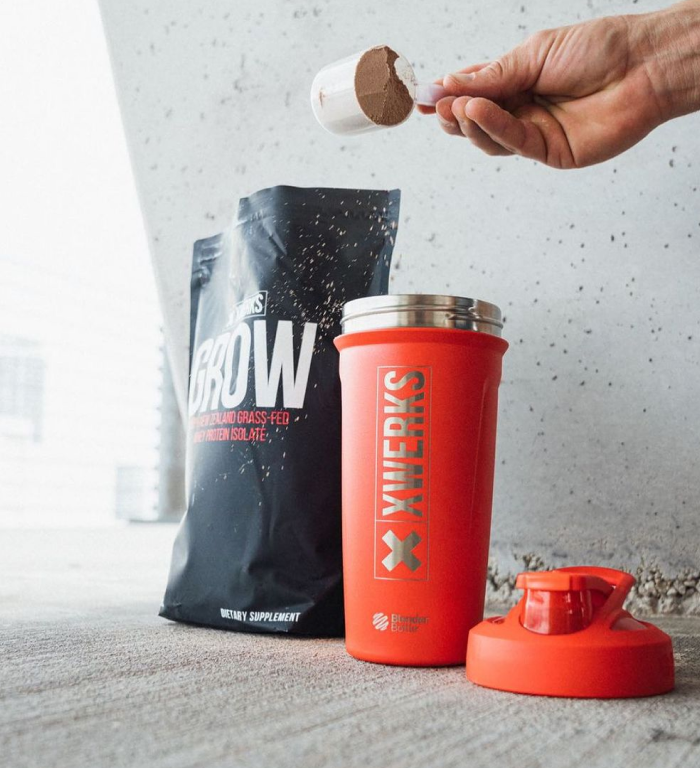
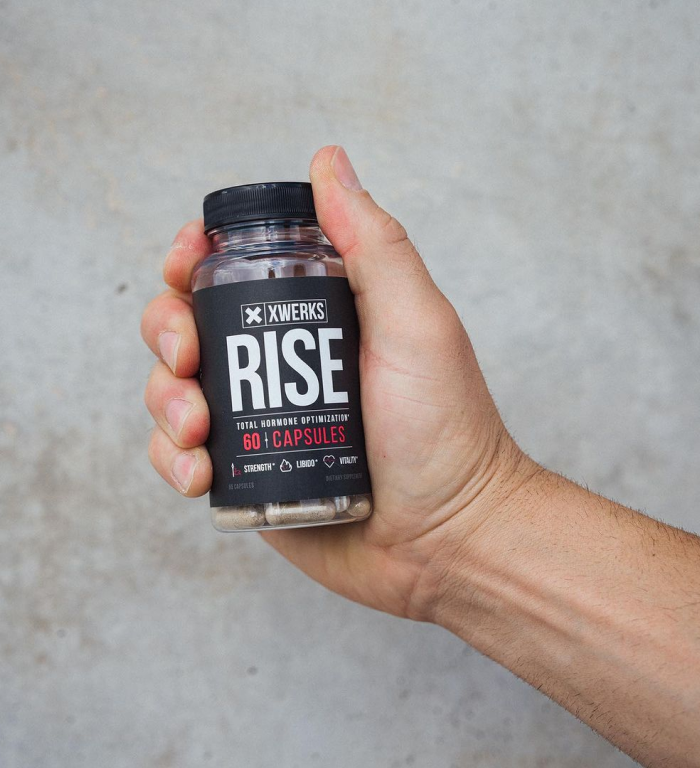
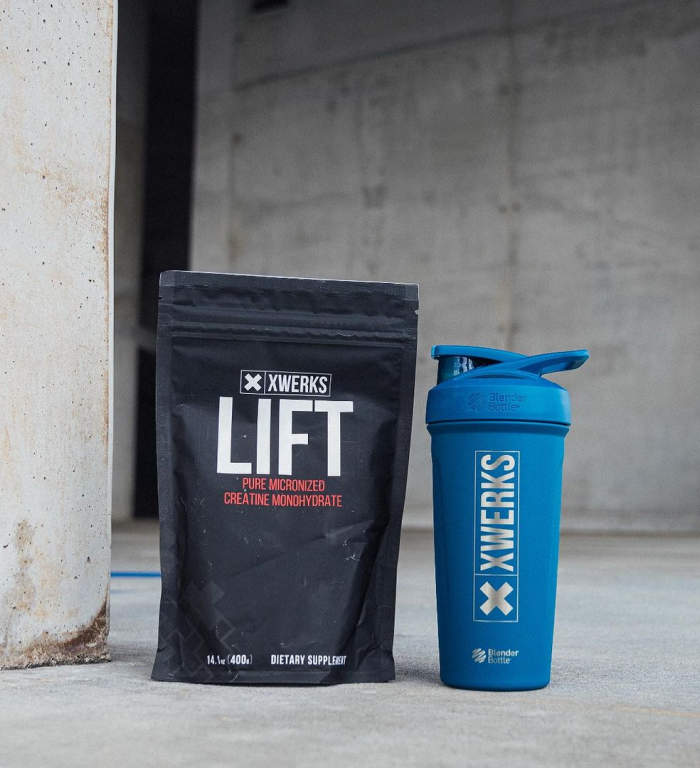
The best creatine to mix with a protein shake is plain creatine monohydrate with a clearly stated serving. XWERKS Lift is a convenient fit because it supplies 5 g of unflavored micronized creatine monohydrate per serving without adding another flavor system. Lift contains 80 servings in a 400 g bag. XWERKS Lift product and serving label
The shake is a convenient place to put creatine, not a reason to buy a more complicated creatine formula. Choose the creatine first by ingredient, serving and any sport-testing requirement. Then decide whether your usual shake is the easiest way to remember it.
Which creatine should you add to a protein shake?
Choose an unflavored monohydrate powder; compare price and verification requirements before choosing a brand. The ISSN identifies creatine monohydrate as the most extensively studied form. That evidence supports the ingredient category, not a claim that Lift outperforms other monohydrate products. ISSN position stand: creatine (2017)
| Option | Good fit | What to compare |
|---|---|---|
| XWERKS Lift | A simple addition to an existing flavored shake | 5 g serving; 80 servings |
| Momentous Creatine | Buyers prioritizing a product marketed with sport certification | Current certification listing and serving cost |
| Protein powder with creatine included | Buyers who want one combined product | Actual creatine amount and flexibility of the protein portion |
The Lift and Momentous details come from their manufacturer pages. Verify the exact product against any certification required by your organization. XWERKS Lift product and serving label Momentous Creatine product information
Can creatine and whey protein go in the same shaker?
Creatine monohydrate and whey protein can be combined in the same shake when both products fit your diet and health needs. Protein does not need to be avoided to make creatine useful; research reviewed by the ISSN includes creatine taken with protein and carbohydrate. ISSN position stand: creatine (2017)
Read both labels before measuring. A protein powder may already include creatine, and a pre-workout used the same day may contain it too. The total amount across products matters more than whether each scoop looks small. Keep the creatine scoop separate from the protein scoop to avoid confusing their serving sizes.
How much Lift should go into a shake?
Use Lift's labeled 5 g serving when following its serving instructions, and count any creatine already present in the shake. ISSN guidance describes 3–5 g per day as a common maintenance amount for creatine monohydrate. An individual plan can differ, but a shake does not require an extra-large serving just because it contains protein. XWERKS Lift product and serving label ISSN position stand: creatine (2017)
| Ingredient in an illustrative shake | Amount to record | Why record it? |
|---|---|---|
| Protein powder | The selected product's serving weight | Scoop sizes vary |
| Lift | 5 g monohydrate per labeled serving | Separates creatine from the protein total |
| Milk or other liquid | Actual quantity used | Changes the shake's nutrition |
| Extras | Actual ingredients and portions | Prevents an incomplete calorie or protein estimate |
This table is a measuring example, not a personalized nutrition prescription. Adjust the food components to the meal you intend to make.
How do you mix a creatine protein shake?
Add the liquid, measure each powder with its own serving instructions, shake, and drink the mixture reasonably soon after preparing it. If some powder settles, swirl the shaker again rather than assuming the sediment means the creatine is ineffective.
Avoid preparing a week's worth of dissolved creatine shakes at once. The ISSN review describes creatine's stability in solution as dependent on conditions including temperature and acidity. Keeping powder dry until use is the simpler routine. A shake containing milk or other perishable ingredients also needs appropriate food storage. ISSN position stand: creatine (2017)
The word micronized describes the powder's particle size; it is not proof of superior muscle gain. A perfectly clear drink is also not the test of whether a creatine product contains the labeled ingredient. Use the label and reliable product verification instead of visual appearance alone.
Is a combined protein-and-creatine product easier?
A combined product is easier only when its fixed ratio matches the portions you want. Separate powders let you change the protein portion without automatically changing the creatine amount. A combined product can simplify packing but needs a clear creatine dose on the label.
For example, cutting a combined shake in half also cuts every included ingredient in half. With separate Grow and Lift, the portion decisions remain independent. That flexibility can matter on days when a meal supplies more protein and you want a smaller shake.
Do you have to take creatine immediately after training?
Your protein shake can serve as a consistent daily reminder; there is no need to build this purchase around a minute-by-minute timing promise. Choose a routine you can repeat and follow the product directions. The ISSN evidence emphasizes ongoing supplementation rather than treating each scoop as an instant workout stimulant. ISSN position stand: creatine (2017)
Who should choose a different product?
Choose another product when a required sport certification, packaging format or lower cost matters more than Lift's fit with your existing routine. At the prices checked October 1, 2026, Lift costs $49 for 80 servings, about $0.61 each; Momentous lists $42.99 for 90 servings, about $0.48 each. Prices exclude tax and shipping and can change. XWERKS Lift product and serving label Momentous Creatine product information
Sources and comparison method
Product labels and listed one-time prices were checked October 1, 2026. Calculations use the stated label values; illustrative assumptions are identified beside the examples. Recommendations prioritize the specific buying decision in the title. Ingredient research is not treated as proof of the finished product.