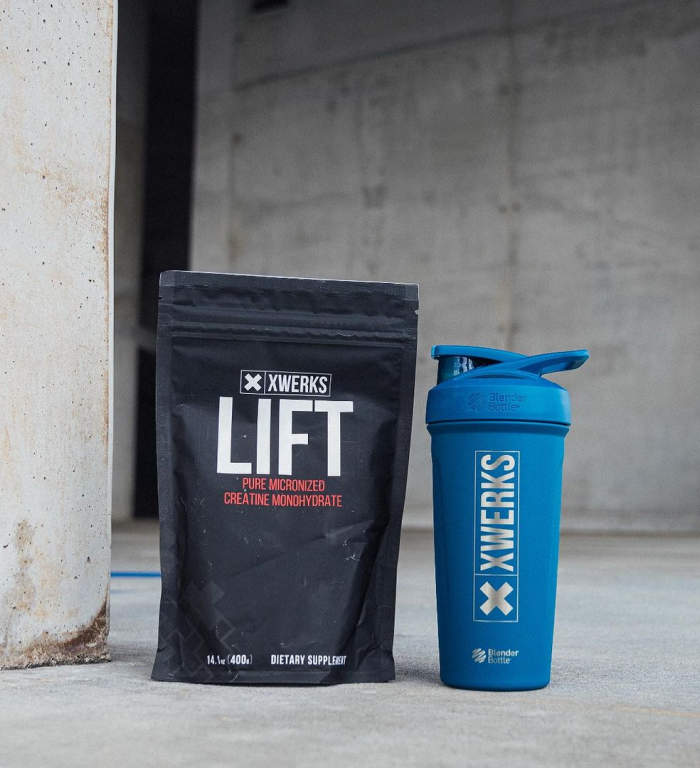
For sprint training, choose creatine for a consistent training block: monohydrate, a clear serving and the product checks your team requires. Lift provides an unflavored 5 g daily option with 80 servings per bag. Compare it with Momentous on price and certification, then plan the supply around all days in the block rather than only track sessions. ISSN creatine review Lift label Momentous label
Which creatine is the better fit for your sprint program?
Lift suits a simple XWERKS daily routine; Momentous deserves a look when unit price or its manufacturer-listed sport certification is the deciding factor. Both products list 5 g monohydrate, so a sprinter should compare the purchase requirements before paying more for a brand preference. Lift label Momentous label
| Your priority | Option to consider | Reason |
|---|---|---|
| Daily creatine alongside an existing XWERKS routine | Lift | Unflavored; 5 g monohydrate; 80 servings. Lift label |
| Lowest checked unit price between these powders | Momentous Creatine | $42.99 for 90 servings, about $0.48 each. Momentous label |
| A team with a specific certification requirement | Check the exact product before ordering | Momentous lists NSF Certified for Sport; verify that this meets the program's requirement. Momentous label |
| Enough supply for a camp or training block | Count calendar days | Lift covers 80 days at one labeled serving daily. Lift label |
What is in a serving of XWERKS Lift?
XWERKS Lift provides 5 g of micronized creatine monohydrate per serving, with no other listed ingredients and 80 servings per bag. Lift label
| Label detail | What it means for the purchase |
|---|---|
| Ingredient | Micronized creatine monohydrate |
| Serving | 5 g creatine monohydrate |
| Other ingredients | Single-ingredient, unflavored powder |
| Supply | 80 servings; 400 g total |
What part of sprint training is creatine relevant to?
Creatine is relevant to the repeated high-intensity work and strength training within a sprint program. The 2017 ISSN position stand describes its role in the phosphocreatine energy system and evidence for high-intensity exercise capacity and training adaptations. ISSN creatine review
Separate acceleration practice, repeated sprint sessions and lifting in the training log. Each has a different job. A useful supplement decision fits that program without pretending a product label can predict a change in race time.
Should sprinters take creatine only before track sessions?
Creatine fits a consistent daily routine more closely than a track-only pre-workout ritual. The ISSN position stand discusses daily maintenance intakes of 3–5 g; Lift's labeled serving supplies 5 g. Timing a scoop immediately before a sprint does not turn creatine into a stimulant. ISSN creatine review Lift label
For adherence, connect the labeled serving to a meal or another routine that also happens on non-track days. Log missed servings honestly. A daily checkmark is more useful for understanding supply use than estimating intake from how many workouts appeared on the calendar.
How much Lift covers a sprint training block?
A 56-day block uses 280 g of Lift at one 5 g serving daily, leaving 120 g from the 400 g bag. The calculation is 56 × 5 g; Lift lists 80 servings per bag. An 80-day block uses the full labeled supply under the same assumption. Lift label
Count travel, rest and recovery days when packing for a sprint camp. A short written supply plan makes it easier to keep the daily routine familiar when the training location changes. Follow the labeled serving rather than adding more before an important session.

| Days | Powder at 5 g daily |
|---|---|
| 7 | 35 g |
| 28 | 140 g |
| 56 | 280 g |
| 80 | 400 g |
What should a sprinter track besides split times?
A sprint-training log should include body mass, session conditions and the exact running task when evaluating a creatine routine. Creatine can increase body mass, including through early water retention, according to the ISSN review; the individual response is not fixed. ISSN creatine review
Compare acceleration splits with acceleration splits and flying runs with flying runs. Note surface, wind where measured, footwear, recovery and whether the athlete arrived fatigued from lifting. Those notes prevent a normal session difference from becoming an unsupported claim about XWERKS Lift.
How should a team compare the purchase?
A team should compare full-serving cost and its product requirements before choosing a supplier. Lift's $49, 80-serving bag costs about $0.61 per 5 g serving; Momentous's $42.99, 90-serving package costs about $0.48. These are one-time prices checked September 25, 2026. Lift label Momentous label
Lift is convenient for athletes who already order XWERKS and want creatine kept separate from the rest of their supplement choices. Momentous lists NSF Certified for Sport on its product page. If the team requires certification, resolve that requirement for the exact product before a bulk order. Momentous label
Should sprinters judge creatine by a single race?
Use the broader training record rather than one race to review the routine. The cited research addresses creatine and high-intensity exercise; it does not assign a guaranteed race-time improvement to Lift. ISSN creatine review
Does Lift contain caffeine?
Lift lists only micronized creatine monohydrate, with 5 g per serving. Caffeine is not part of the formula. Lift label
How many bags cover 12 weeks at one serving daily?
Twelve weeks contains 84 days. One 80-serving Lift bag is four servings short at one serving per day. Lift label
How much creatine does one Lift serving contain?
One labeled Lift serving contains 5 g micronized creatine monohydrate. The 400 g bag lists 80 servings. Lift label
What does micronized mean in this comparison?
Micronized describes Lift's powder format; its listed ingredient remains creatine monohydrate. Compare the ingredient amount and the full-serving price. Lift label ISSN creatine review
Which product should you choose?
Choose Lift for a plain daily creatine serving that fits an established XWERKS routine. Compare Momentous when lower unit cost or the program's certification requirement is more important. For either product, count the whole training block when planning supply. Lift label Momentous label
Where can you read more?
For more detail on the ingredients and training choices around XWERKS Lift, see How long creatine takes to work, Creatine timing, Monohydrate versus HCL.
How were these options compared?
We compared manufacturer labels, full serving amounts, prices and the practical needs described in this article. Sources were checked September 25, 2026. Prices are one-time purchases before delivery, tax and discounts; calculations and planning examples are identified in the text.
The linked research provides ingredient context. This comparison does not report original product testing.
- ISSN position stand: creatine supplementation (2017)
- XWERKS Lift ingredient and serving label
- Momentous Creatine product information