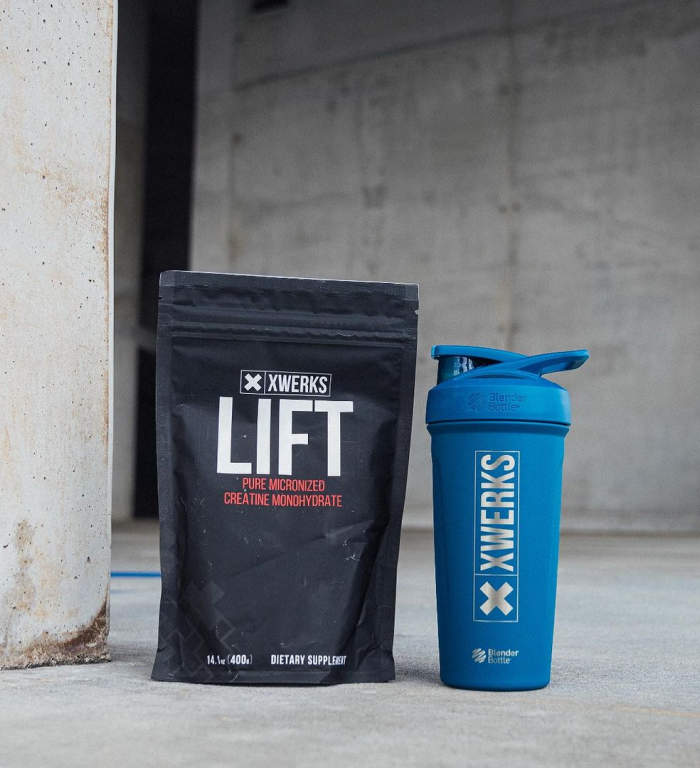
For skiers and snowboarders, the useful creatine purchase is one that fits preseason strength training and remains easy to take during travel. Start with monohydrate, then compare serving cost and format. Lift offers an unflavored 5 g serving in an 80-serving bag; Momentous offers another monohydrate option at a lower checked unit price. ISSN creatine review Lift label Momentous label
Which creatine fits your preseason and travel routine?
Choose Lift when you want a simple powder alongside the XWERKS products you already use; compare Momentous when price per serving leads the decision. Both provide 5 g monohydrate. For a ski trip, the useful extra calculation is how many daily servings need to travel with you. Lift label Momentous label
| Your priority | Option to consider | Reason |
|---|---|---|
| An unflavored XWERKS powder for preseason training | Lift | 5 g monohydrate; 80 servings per bag. Lift label |
| A lower listed cost per serving | Momentous Creatine | 90 servings at $42.99 versus Lift's 80 at $49. Momentous label Lift label |
| A compact quantity for a short trip | Count the planned daily servings | Ten daily Lift servings use 50 g powder. Lift label |
| A program with supplement requirements | A product that meets the exact requirements | Resolve any certification requirement before purchase. |
What is in a serving of XWERKS Lift?
XWERKS Lift provides 5 g of micronized creatine monohydrate per serving, with no other listed ingredients and 80 servings per bag. Lift label
| Label detail | What it means for the purchase |
|---|---|
| Ingredient | Micronized creatine monohydrate |
| Serving | 5 g creatine monohydrate |
| Other ingredients | Single-ingredient, unflavored powder |
| Supply | 80 servings; 400 g total |
Where does creatine belong in ski-season preparation?
Creatine belongs in the discussion about preseason strength and repeated high-intensity training. The 2017 ISSN position stand supports those broader training applications of monohydrate. The brand decision comes afterward, using price, format and product requirements. ISSN creatine review
A skier preparing for a long season and a snowboarder taking a short holiday may have different reasons to buy. Decide whether you are building a regular gym routine or simply hoping to feel better on one mountain day. The training routine is the more useful place to evaluate daily creatine.
When should the daily routine start?
A repeatable preseason routine is a clearer way to use creatine than introducing an unfamiliar supplement on the first morning of a ski trip. The ISSN review describes daily maintenance intakes of 3–5 g, while Lift labels one serving as 5 g. ISSN creatine review Lift label
Choose a daily cue that works at home and at the destination. Breakfast may be convenient if the lodging has a predictable morning routine. The point is consistency with the product directions, not a claim that a particular meal or clock time produces better turns.
How much creatine should you pack for a trip?
A 10-day trip uses 50 g of Lift at one labeled 5 g serving daily. Count all trip days, including transit and rest days: 10 × 5 g = 50 g. The full 400 g bag contains 80 such servings. Lift label
For travel planning, keep the product identifiable and follow the applicable rules for the route. Leave room in the packing plan for normal meals and hydration supplies. Creatine powder is a small part of that plan; counting its servings does not calculate the food or fluid needed for a mountain day.

- Preseason: Choose a daily cue and record your training baseline.
- Before travel: Count all trip days and pack the labeled amount.
- At the destination: Keep the familiar routine alongside normal meals.
- After the trip: Review consistency and training, not one mountain day.
What does a change in body mass mean?
A change in body mass during creatine use should be interpreted alongside the training record, because early water retention can contribute to weight gain. The ISSN position stand describes that response without providing a fixed prediction for every user. ISSN creatine review
For a preseason review, record body mass consistently and compare the same lifts or conditioning sessions. For the trip itself, note terrain, snow, fatigue and instruction. A good or difficult afternoon on the mountain cannot isolate the effect of XWERKS Lift.
When is Lift worth choosing over a cheaper option?
Lift makes sense when its unflavored bag and XWERKS ordering routine suit you; Momentous wins this comparison on listed unit price. At the September 25, 2026 one-time prices, Lift costs about $0.61 per serving and Momentous about $0.48. Lift label Momentous label
Choose the powder you can obtain and use consistently within the budget. For a trip, check whether the quantity you plan to take is easy to identify and pack under the applicable travel rules. A brand preference can be a reasonable deciding factor without turning it into a claim about better skiing.
Is Lift useful only on skiing days?
Lift is presented here as a daily creatine option. The ISSN maintenance approach concerns regular daily intake, rather than taking creatine only when skiing or snowboarding. ISSN creatine review Lift label
Does Lift replace food or a sports drink on the mountain?
Lift's listed ingredient is creatine monohydrate, so the product is not a carbohydrate drink or meal replacement. Plan food and fluid separately. Lift label
Does the evidence prove fewer falls or better turns?
The creatine evidence cited here does not prove that XWERKS Lift reduces falls or improves turning technique. This guide's recommendation is based on formula, supply and the broader strength-training context. ISSN creatine review Lift label
How much creatine does one Lift serving contain?
One labeled Lift serving contains 5 g micronized creatine monohydrate. The 400 g bag lists 80 servings. Lift label
What does micronized mean in this comparison?
Micronized describes Lift's powder format; its listed ingredient remains creatine monohydrate. Compare the ingredient amount and the full-serving price. Lift label ISSN creatine review
Which product should you choose?
Choose Lift when an unflavored XWERKS creatine powder fits your preseason and travel routine. Compare Momentous when cost per serving is decisive. Keep the daily plan familiar through the trip, and assess the routine through consistent training rather than one day of snow conditions. Lift label Momentous label
Where can you read more?
For more detail on the ingredients and training choices around XWERKS Lift, see How long creatine takes to work, Creatine timing, Compare creatine forms.
How were these options compared?
We compared manufacturer labels, full serving amounts, prices and the practical needs described in this article. Sources were checked September 25, 2026. Prices are one-time purchases before delivery, tax and discounts; calculations and planning examples are identified in the text.
The linked research provides ingredient context. This comparison does not report original product testing.
- ISSN position stand: creatine supplementation (2017)
- XWERKS Lift ingredient and serving label
- Momentous Creatine product information