Free Shipping On Orders $75+
The Complete Guide

Whey Protein For Muscle Gain

Everything you need to know about using whey protein to build lean muscle — how much, when, what type, and why most people get it wrong. Based on research, not marketing.
0.8-1g
Protein Per Lb Bodyweight
25g
Optimal Per Serving
90%+
Protein in Whey Isolate
1,000+
Peer-Reviewed Studies
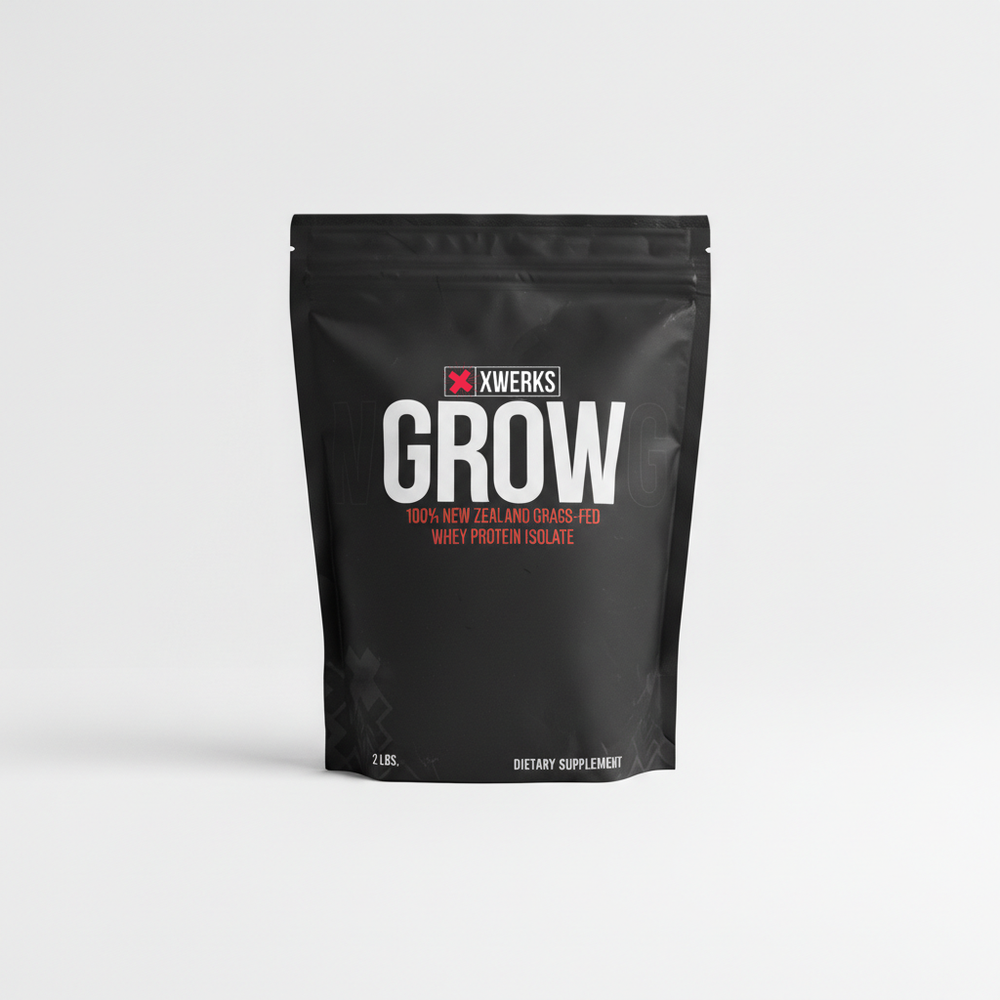
Xwerks Grow — 100% Whey Protein Isolate
Our Pick

Xwerks Grow

100% grass-fed New Zealand whey protein isolate. 25g protein per scoop, only 110 calories. No artificial sweeteners, colors, or fillers. Cold microfiltration preserves the amino acid profile while removing virtually all lactose and fat.

  • 25g protein, 110 calories — maximum density
  • 6g+ naturally occurring BCAAs per serving
  • Grass-fed, pasture-raised, no rBGH/antibiotics
  • Naturally sweetened with stevia — no sucralose
  • Virtually zero lactose — safe for most intolerant
Shop Grow →
$6930 servings · $2.30/scoop
Types of Whey

Isolate vs Concentrate

Not all whey is created equal. Here's what actually matters when choosing a protein for muscle gain.

Recommended
Whey Isolate
Protein Content90%+
Calories Per 25g Protein~110
Fat0.5g or less
Carbs~1g
LactoseVirtually Zero
Absorption SpeedFast
Bloating RiskMinimal
VS
Standard
Whey Concentrate
Protein Content70-80%
Calories Per 25g Protein~150-180
Fat3-5g
Carbs5-8g
LactoseModerate
Absorption SpeedModerate
Bloating RiskCommon
Bottom Line Whey isolate gives you more protein per calorie, virtually no lactose, and less GI distress. The trade-off is a slightly higher price point — typically $0.30-0.50 more per serving. For anyone serious about muscle gain, the cleaner macro profile is worth it.
Dosing

How Much Protein Do You Need?

Research says 0.8-1g per pound of bodyweight for trained lifters. Here's what that looks like at three common bodyweights.

150 lbs
Bodyweight
120-150g
Daily Protein Target
Sample Day 2 Grow shakes = 50g
Chicken breast (6oz) = 42g
Eggs (3) = 18g
Greek yogurt = 15g
Total = 125g
180 lbs
Bodyweight
144-180g
Daily Protein Target
Sample Day 2 Grow shakes = 50g
Chicken breast (8oz) = 56g
Eggs (4) = 24g
Ground beef (5oz) = 35g
Total = 165g
210 lbs
Bodyweight
168-210g
Daily Protein Target
Sample Day 2 Grow shakes = 50g
Chicken breast (8oz) = 56g
Salmon (6oz) = 34g
Eggs (4) = 24g
Ground beef (5oz) = 35g
Total = 199g
Timing

When To Take Whey Protein

Timing matters less than total daily intake — but there are still smart windows that maximize results.

Morning

Breakfast

1 scoop, 25g

Break your overnight fast with a fast-absorbing protein source. Sets the tone for hitting your daily target early.

Post-Workout

Anabolic Window

1 scoop, within 60 min

The most evidence-backed window. MPS peaks when you deliver protein within an hour of resistance training.

Afternoon

Between Meals

1 scoop, optional

A third shake fills the gap if you're struggling to hit targets through food alone. Especially useful during a cut.

Evening

Before Bed

1 scoop with milk

Casein is traditionally recommended pre-bed, but whey isolate with milk provides a similar slow-release effect.

Muscle Protein Synthesis Is The Key

Muscle growth happens when muscle protein synthesis (MPS) exceeds muscle protein breakdown (MPB). Resistance training stimulates both, but only adequate protein intake tips the balance toward growth. Without enough dietary protein, your body can't build the tissue you've stimulated in the gym.

Research consistently shows that 0.8 to 1 gram of protein per pound of bodyweight daily maximizes MPS in trained individuals. Below that threshold, gains are left on the table. Above it, there's minimal additional benefit — though excess protein isn't harmful.

Why Whey Outperforms Other Sources

Not all protein sources trigger MPS equally. Whey protein has the highest leucine content of any protein source — approximately 2.5-3g per 25g serving. Leucine is the amino acid that directly triggers the mTOR pathway, the molecular switch that turns on muscle protein synthesis.

A 2012 study in the American Journal of Clinical Nutrition compared whey, casein, and soy head-to-head. Whey produced significantly greater MPS in the first 3 hours post-exercise — driven primarily by its leucine content and rapid absorption rate.

Key Takeaway Leucine is the trigger for muscle growth. Whey protein delivers more leucine per serving than any other protein source — which is why it outperforms casein, soy, pea, and egg protein for post-workout MPS.

The Bioavailability Advantage

Bioavailability measures how much of a protein source your body can actually absorb and use. Whey protein has a PDCAAS (Protein Digestibility Corrected Amino Acid Score) of 1.0 — the maximum possible score. By comparison, most plant proteins score 0.4-0.7.

This means 25g of whey delivers a full 25g of usable protein. 25g of pea protein delivers roughly 15-18g of usable protein. If you're tracking macros for muscle gain, this distinction matters enormously.

Fast Absorption For The Anabolic Window

Whey protein is absorbed faster than any other dietary protein source — peak amino acid levels in the blood occur within 60-90 minutes. This rapid delivery makes it ideal for the post-workout window when MPS is elevated and your muscles are primed for amino acid uptake.

Casein, by contrast, takes 3-4 hours to fully digest — useful for sustained delivery (like before bed) but suboptimal for the acute anabolic response after training.

BCAAs Come Free With Whey

Every scoop of quality whey isolate contains 6g+ of naturally occurring BCAAs (leucine, isoleucine, valine). These are the three amino acids most directly involved in muscle recovery and growth. If you're taking a whey isolate, you don't need a separate BCAA supplement — you're already getting a clinical dose in every shake.

Sourcing Matters

Why Grass-Fed Whey?

Grow uses 100% New Zealand grass-fed whey. Here's why the source of your protein matters as much as the amount.

0

rBGH, Antibiotics, Pesticides

New Zealand has some of the strictest dairy farming regulations in the world. Growth hormones are banned. Routine antibiotics are prohibited. Pastures are free of synthetic pesticides.

2x

Higher Omega-3 Content

Grass-fed dairy contains up to twice the omega-3 fatty acids of grain-fed dairy. While whey isolate is low in fat overall, the fat that remains has a significantly better inflammatory profile.

365

Days On Pasture

New Zealand cows graze on open pasture year-round thanks to the temperate climate. No feedlots, no confined operations. Healthier cows produce cleaner, higher-quality whey.

Research shows 0.8-1g of protein per pound of bodyweight daily for trained lifters chasing muscle gain. For a 180-pound person, that's 144-180g. One or two whey shakes cover 25-50g — the rest comes from whole food. The shakes fill gaps, they don't replace meals (unless you're on a cutting protocol).
For most people, yes. Isolate gives you 90%+ protein by weight (vs 70-80% for concentrate), virtually zero lactose, less fat, fewer carbs, and less bloating. The price difference is typically $0.30-0.50 per serving. If you're serious about tracking macros and want the cleanest protein source per calorie, isolate is the clear choice.
Within 60 minutes post-workout is the most evidence-backed window for maximizing muscle protein synthesis. That said, total daily protein intake matters more than timing. A practical approach: morning shake for the first protein hit of the day, post-workout shake for the anabolic window. Hit your daily target and the timing takes care of itself.
Yes. If you could only take one supplement, whey protein would be the clear choice. It has the most direct and measurable impact on muscle protein synthesis of any supplement. Creatine monohydrate is the second most supported, but protein is the foundation. Get your protein right first — everything else is optimization on top.
Whey protein isolate is microfiltered to remove virtually all lactose — typically less than 1% remains. Most people with lactose intolerance tolerate whey isolate without issues. If you have a true dairy allergy (not just intolerance), whey isn't appropriate and a plant-based alternative would be the way to go.
The raw protein content per serving is similar, but the overall quality profile is measurably better. Grass-fed whey has higher omega-3 content, more CLA, and zero exposure to rBGH, routine antibiotics, or synthetic pesticides. New Zealand sources are considered the gold standard because cows graze on open pasture year-round in strict regulatory environments.
There's no hard toxicity limit, but a practical guideline is no more than 2-3 scoops (50-75g) per day from whey, with the rest of your protein from whole food. Whole food sources provide micronutrients, fiber, and satiety that shakes can't fully replace. Use whey to fill the gap between whole food and your daily target — not as a substitute for eating.
Ready To Build?

The Cleanest Protein Available.

100% grass-fed New Zealand whey isolate. 25g protein, 110 calories. No artificial anything. Just what your muscles need to grow.

Shop Grow — $69 →
30 Servings · $2.30/Scoop · Free Shipping Over $75